Software Buyer Brief
Phishing Training Software Buying Checklist For Safer Reporting
Short answer: phishing training software should help employees recognize, avoid, and report suspicious messages without turning security into blame. Before buying, check training content, simulation design, reporting workflow, email integration, role-based targeting, manager dashboards, privacy controls, localization, accessibility, evidence export, and how the program measures safer behavior over time.
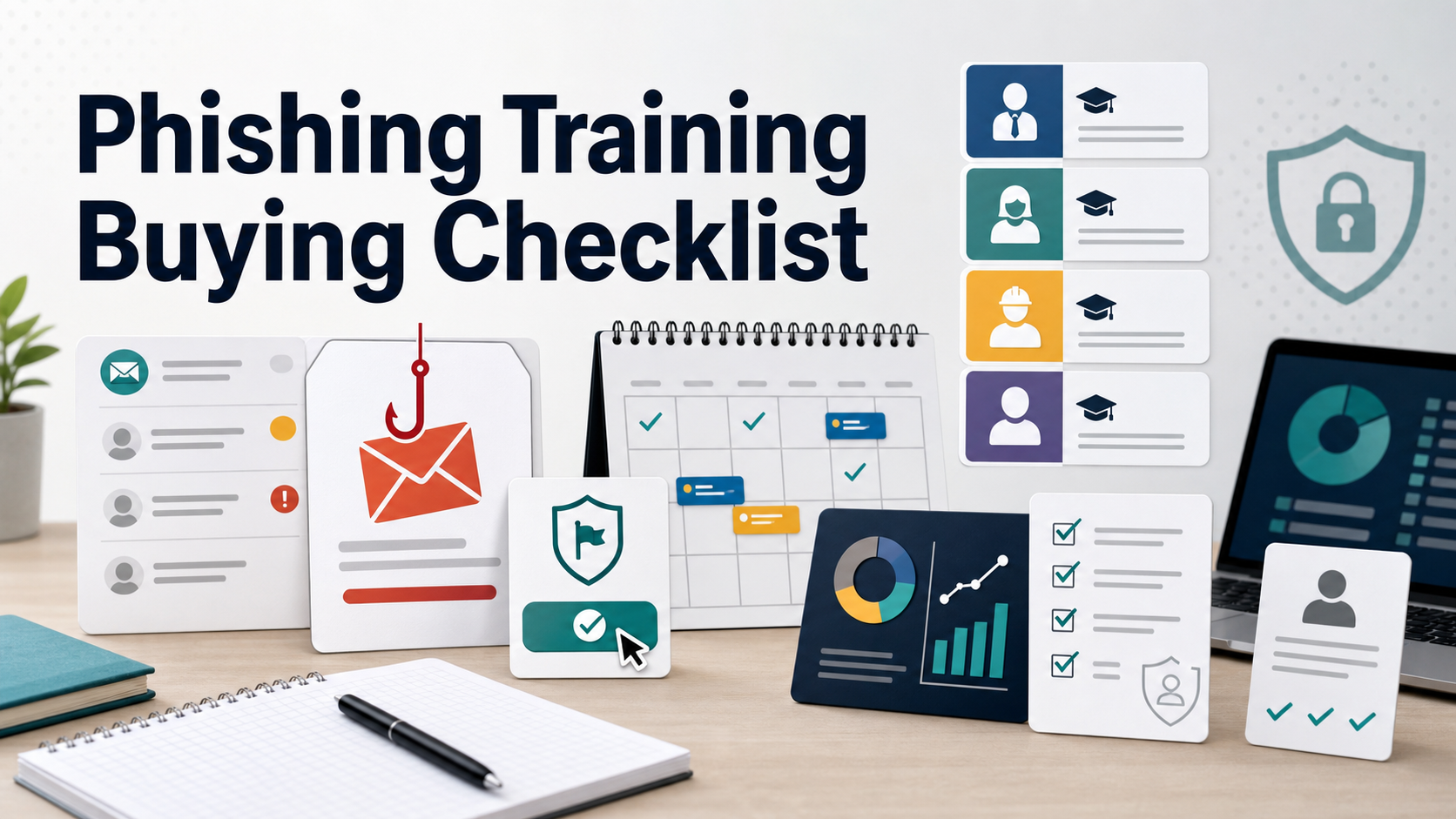
A phishing training purchase usually starts after a near miss. Someone clicked a fake invoice, a payroll request looked real, a vendor account was spoofed, or leadership wants proof that employees are trained.
The wrong tool turns that moment into a monthly trap. The right tool builds a reporting habit, teaches practical judgment, and gives IT a faster path from suspicious message to action. This checklist is for buyers comparing training platforms, not looking for a leaderboard.
Define The Behavior You Want To Improve
Start with the business behavior, not the course catalog. Do you want more employees to report suspicious email? Faster reporting? Fewer credential submissions? Better invoice verification? Better executive assistant handling of urgent requests?
NIST’s security awareness guidance treats awareness, training, and education as parts of a program, not one-off content. A phishing tool should support the program goal you choose.
Do Not Buy Simulations Alone
Simulated phishing can be useful, but it is not the whole product. Ask how the platform teaches before and after a simulation, how it explains misses, and how it reinforces correct reporting.
CISA’s phishing guidance recommends user phishing awareness training as part of stopping phishing attacks early. The buying question is whether the tool makes training actionable, not whether it can trick employees with realistic emails.
| Buying area | Question to ask | Why it matters |
|---|---|---|
| Content | Does training teach real decisions employees face, not just definitions? | People need practical judgment for invoices, links, attachments, QR codes, and login prompts. |
| Simulation | Can simulations be tuned by role, risk, language, and recent threat theme? | Generic tests may not match the messages employees actually receive. |
| Reporting | Does the product make reporting suspicious messages easy from the inbox? | Faster reporting helps IT investigate and warn others. |
| Metrics | Does it measure reporting and improvement, not only click rate? | Click-only dashboards can encourage blame instead of risk reduction. |
| Privacy | Can results be limited by role, anonymized, retained, and exported appropriately? | Training data can affect employee trust and HR risk. |
Prioritize The Report Phishing Workflow
The best training outcome is not just fewer clicks. It is employees reporting suspicious messages quickly. Ask whether the product includes a reporting button, where reports go, how messages are analyzed, and whether IT can respond to similar messages across mailboxes.
FTC small business guidance tells businesses to teach employees how to avoid phishing scams. A reporting workflow turns that advice into an operational loop: spot, report, investigate, warn, and learn.
Ask How The Tool Handles Real Phishing
Some tools only run simulations. Others also process real user-reported emails. Ask whether the product can classify reported messages, show headers, detonate links or attachments through a safe process, integrate with email security, and open tickets.
If your IT team is small, ask what happens after a report. A mailbox full of unreviewed reports can become another backlog.
Evaluate Role-Based Training
Finance, HR, executives, customer support, IT admins, and sales teams face different phishing patterns. A payroll employee may need training on direct-deposit changes. An executive assistant may need training on urgent requests. A developer may need training on repository or package notifications.
Ask whether the platform supports role groups, department-specific lessons, executive simulations, privileged-user training, and different risk paths for employees who handle payments or credentials.
Check Training Frequency And Fatigue
More training is not always better. Ask whether the platform supports short lessons, campaign spacing, reminders, adaptive paths, and quiet periods for busy seasons.
Training that annoys employees can reduce trust. The product should help you run a program people can actually complete.
Review Metrics Beyond Click Rate
Click rate is easy to measure, but it can be misleading. Better buying questions include: Are employees reporting faster? Are repeat risky behaviors decreasing? Are high-risk departments improving? Are real phishing reports increasing? Are managers seeing only the data they need?
Ask for dashboards that show trend lines, completion, report rate, failure categories, repeat coaching, and evidence export for audits or customer security reviews.
Make Privacy And Culture Requirements Written
Phishing training data can identify employees, departments, managers, locations, and behavior over time. Ask who can see individual results, whether reports can be anonymized, how long data is retained, and whether HR can access it.
Also ask whether the product supports a no-shame communication style. Security teams need trust. Employees who fear punishment may stop reporting mistakes quickly.
Check Localization And Accessibility
If employees work in different languages, countries, or accessibility contexts, ask whether training is localized and accessible. A phishing example that makes sense in one region may not make sense elsewhere.
Review language support, captions, screen reader compatibility, mobile access, time-zone scheduling, and whether campaigns can avoid local holidays or critical business periods.
Confirm Integrations Before Contracting
Ask how the product connects to your email platform, identity provider, HRIS, directory groups, ticketing system, SIEM, and security mailbox. Also ask what permissions the product needs in your email environment.
If the tool requires broad mailbox access, your security and privacy reviewers should understand exactly why.
Before You Buy, Ask These Questions
- What behavior are we trying to improve: recognition, reporting, verification, or response?
- Does the tool include training, simulations, and real-report handling?
- Can employees report suspicious messages from the inbox?
- Who reviews reported messages, and how are tickets or alerts created?
- Can campaigns be adjusted by role, department, language, and risk level?
- What metrics show improvement beyond click rate?
- Who can see individual employee results?
- How long is training and simulation data retained?
- Does the tool integrate with email, identity, HRIS, and ticketing?
- Can we export evidence for audits or customer reviews?
FAQ
Is phishing simulation enough by itself?
No. Simulation without training, reporting, and follow-up can become a guessing game. The tool should help employees learn what to do next.
Should phishing training software shame employees who click?
No. A blame-heavy program can reduce trust and reporting. The buyer should look for coaching, safe reporting, and trend improvement rather than public punishment.
What metric matters most?
Report rate and speed often matter more than click rate alone. A business wants suspicious messages reported quickly enough for IT to act.
Who should own the tool?
Security or IT may own administration, but HR, legal, compliance, and communications should review privacy, culture, and employee messaging expectations before launch.