
Short answer: Buy expense management software only after a proof of value processes representative receipts, missing documents, mileage, per diem, foreign currency, split allocations, card feeds, duplicates, policy exceptions, approvals, reimbursements, and accounting periods. Verify that source evidence remains linked to every transformation; policy versions and exceptions are explainable; card and reimbursement totals reconcile; duplicate and anomaly signals produce review rather than opaque rejection; sensitive receipt data is minimized and access-controlled; and complete records can be exported for tax, audit, and replacement. Model transaction, card, FX, integration, implementation, and support costs together.
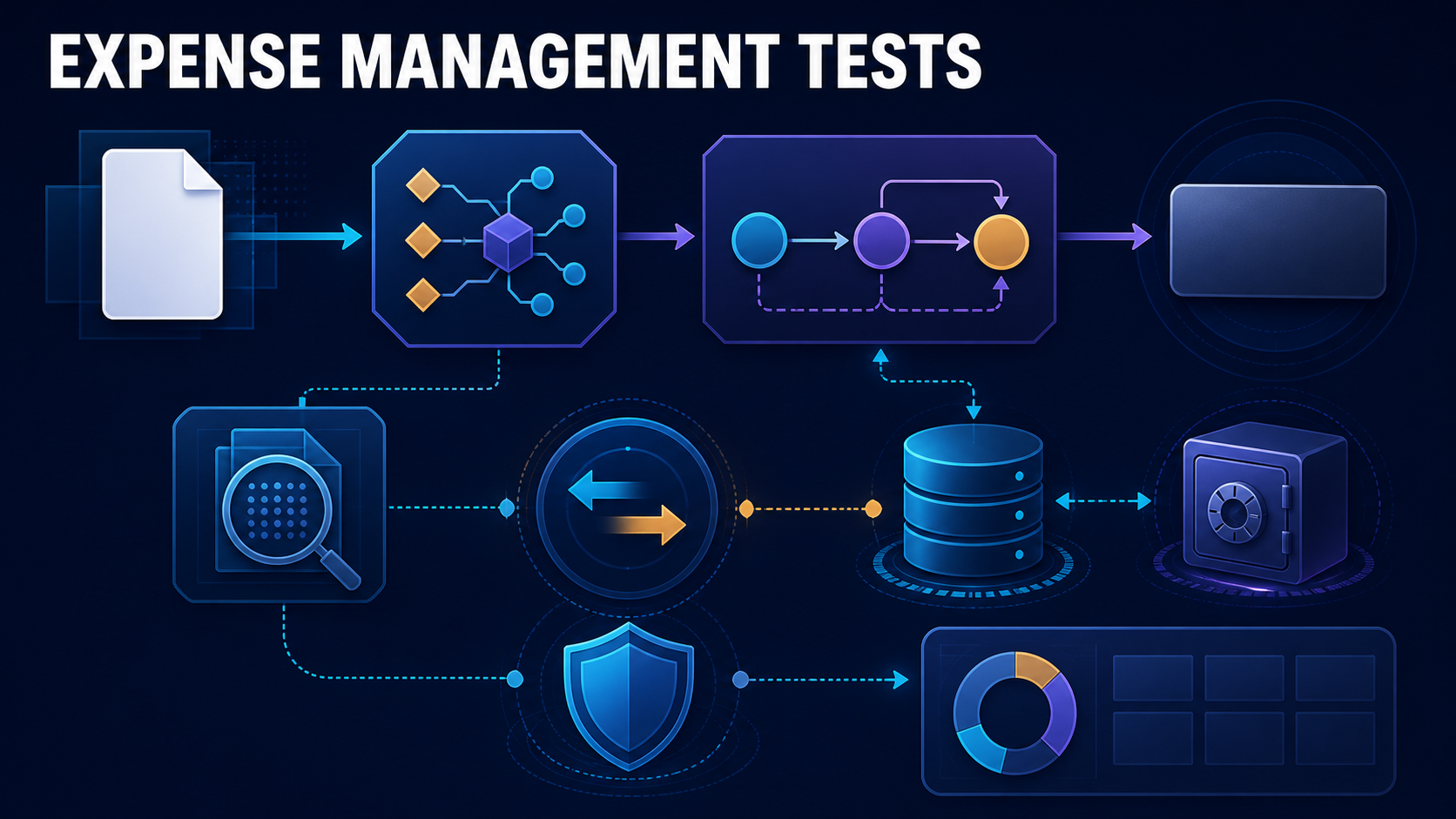
Expense management software turns employee purchases and travel into reimbursement, card settlement, accounting, and tax evidence. Automation speeds the flow only if the underlying document, business purpose, approval, coding, and payment remain traceable.
Do not test only a clean domestic receipt. Include unreadable and duplicate receipts, missing evidence, tips and taxes, personal portions, mileage, per diem, foreign currency, card reversals, canceled trips, split entities, delegated approvals, terminated users, closed periods, and rejected reimbursements.
Prove Receipt, Invoice, Mileage, And Evidence Capture
Define mobile, email, upload, card feed, paper, OCR, line items, taxes, tips, dates, merchants, currency, mileage, per diem, missing documents, and originals. The buying brief should name users, workflows, data, integrations, administration, exclusions, assumptions, and the condition that changes the requirement.
Require labeled document set, field accuracy by type, original-to-record trace, duplicate set, and manual correction history. High headline OCR accuracy can hide wrong amounts, dates, taxes, currencies, or evidence links in difficult documents. Preserve the result in the scored demo, security review, implementation plan, contract, and renewal record so acceptance is auditable.
Validate Policy Rules, Versions, And Exceptions
Define categories, limits, merchants, travel class, meals, gifts, attendees, purpose, receipts, mileage, per diem, regions, entities, roles, effective dates, and exceptions. The buying brief should name users, workflows, data, integrations, administration, exclusions, assumptions, and the condition that changes the requirement.
Require boundary-value scenarios, policy version diff, expected decision matrix, exception reason and approval, and rollback. A rule can apply the wrong entity, date, currency, or employee class and silently approve or reject valid spending. Preserve the result in the scored demo, security review, implementation plan, contract, and renewal record so acceptance is auditable.
Test Approval, Delegation, Segregation, And Appeals
Define manager and cost owner approval, thresholds, delegation, absence, self-approval, conflicts, escalations, reminders, rejection, resubmission, overrides, and audit. The buying brief should name users, workflows, data, integrations, administration, exclusions, assumptions, and the condition that changes the requirement.
Require approval matrix, prohibited self-approval tests, delegation expiry, exception trace, and employee appeal workflow. Convenient delegation can bypass segregation of duties or leave an expense trapped without accountable resolution. Preserve the result in the scored demo, security review, implementation plan, contract, and renewal record so acceptance is auditable.
Reconcile Cards, Cash, Advances, And Reimbursements
Define card authorization and settlement, cash, personal portions, advances, credits, reversals, partial refunds, reimbursement methods, failed payments, duplicates, and employee balances. The buying brief should name users, workflows, data, integrations, administration, exclusions, assumptions, and the condition that changes the requirement.
Require transaction-to-report-to-payment reconciliation, reversal tests, duplicate control, failed-payment recovery, and balance aging. An approved report is not complete when the card settlement, employee reimbursement, or return of excess remains unmatched. Preserve the result in the scored demo, security review, implementation plan, contract, and renewal record so acceptance is auditable.
Verify Accounting, Tax, Travel, And Entity Integrations
Define general ledger, projects, clients, tax codes, VAT or sales tax, entities, currencies, exchange rates, payroll, travel, procurement, APIs, ownership, close periods, and corrections. The buying brief should name users, workflows, data, integrations, administration, exclusions, assumptions, and the condition that changes the requirement.
Require source-to-field map, journal reconciliation, rate tests, closed-period handling, retry recovery, and correction propagation. Correct receipts can become wrong books when mappings, rates, entities, or effective dates drift. Preserve the result in the scored demo, security review, implementation plan, contract, and renewal record so acceptance is auditable.
Evaluate Duplicate, Fraud, And Anomaly Controls
Define same receipt, altered image, card and cash overlap, split transactions, weekend or location anomalies, prohibited merchants, collusion, models, explanations, false positives, and reviewer workflow. The buying brief should name users, workflows, data, integrations, administration, exclusions, assumptions, and the condition that changes the requirement.
Require labeled scenario corpus, precision and recall, explanation samples, reviewer outcomes, override monitoring, and drift thresholds. Opaque anomaly scores can burden legitimate employees while sophisticated duplicates pass through. Preserve the result in the scored demo, security review, implementation plan, contract, and renewal record so acceptance is auditable.
Secure Sensitive Evidence And Preserve Auditability
Define roles, receipt details, card tokens, bank data, travel and location, exports, service accounts, support access, encryption, audit logs, retention, legal hold, deletion, incident response, and tenant separation. The buying brief should name users, workflows, data, integrations, administration, exclusions, assumptions, and the condition that changes the requirement.
Require field-level role tests, secret rotation, audit export, retention expiry, deletion trace, and incident tabletop. Receipts reveal personal, travel, health, and payment details beyond the accounting fields needed for the business record. Preserve the result in the scored demo, security review, implementation plan, contract, and renewal record so acceptance is auditable.
Model Operations, Portability, And Total Cost
Define active users, reports, transactions, cards, reimbursements, FX, entities, integrations, implementation, policy administration, audit support, premium features, renewal, and exit. The buying brief should name users, workflows, data, integrations, administration, exclusions, assumptions, and the condition that changes the requirement.
Require three-year scenarios, operating RACI, measured close effort, contract protections, complete evidence export, and replacement rehearsal. Card economics, FX spreads, transaction tiers, services, and inaccessible historical evidence can outweigh a low license price. Preserve the result in the scored demo, security review, implementation plan, contract, and renewal record so acceptance is auditable.
Review The Platform From Original Evidence To Reconciled Books
Prove Evidence, Policy, Approval, Payment, And Accounting
Prove Receipt, Invoice, Mileage, And Evidence Capture
Confirm mobile, email, upload, card feed, paper, OCR, line items, taxes, tips, dates, merchants, currency, mileage, per diem, missing documents, and originals; retain labeled document set, field accuracy by type, original-to-record trace, duplicate set, and manual correction history.
Validate Policy Rules, Versions, And Exceptions
Confirm categories, limits, merchants, travel class, meals, gifts, attendees, purpose, receipts, mileage, per diem, regions, entities, roles, effective dates, and exceptions; retain boundary-value scenarios, policy version diff, expected decision matrix, exception reason and approval, and rollback.
Prove Fraud Controls, Security, Portability, And Sustainable Cost
Secure Sensitive Evidence And Preserve Auditability
Confirm roles, receipt details, card tokens, bank data, travel and location, exports, service accounts, support access, encryption, audit logs, retention, legal hold, deletion, incident response, and tenant separation; retain field-level role tests, secret rotation, audit export, retention expiry, deletion trace, and incident tabletop.
Model Operations, Portability, And Total Cost
Confirm active users, reports, transactions, cards, reimbursements, FX, entities, integrations, implementation, policy administration, audit support, premium features, renewal, and exit; retain three-year scenarios, operating RACI, measured close effort, contract protections, complete evidence export, and replacement rehearsal.
Expense Management Software Buying Test Scorecard
| Buying area | What to confirm | Why it matters |
|---|---|---|
| Prove Receipt, Invoice, Mileage, And Evidence Capture | mobile, email, upload, card feed, paper, OCR, line items, taxes, tips, dates, merchants, currency, mileage, per diem, missing documents, and originals. | High headline OCR accuracy can hide wrong amounts, dates, taxes, currencies, or evidence links in difficult documents. |
| Validate Policy Rules, Versions, And Exceptions | categories, limits, merchants, travel class, meals, gifts, attendees, purpose, receipts, mileage, per diem, regions, entities, roles, effective dates, and exceptions. | A rule can apply the wrong entity, date, currency, or employee class and silently approve or reject valid spending. |
| Test Approval, Delegation, Segregation, And Appeals | manager and cost owner approval, thresholds, delegation, absence, self-approval, conflicts, escalations, reminders, rejection, resubmission, overrides, and audit. | Convenient delegation can bypass segregation of duties or leave an expense trapped without accountable resolution. |
| Reconcile Cards, Cash, Advances, And Reimbursements | card authorization and settlement, cash, personal portions, advances, credits, reversals, partial refunds, reimbursement methods, failed payments, duplicates, and employee balances. | An approved report is not complete when the card settlement, employee reimbursement, or return of excess remains unmatched. |
| Verify Accounting, Tax, Travel, And Entity Integrations | general ledger, projects, clients, tax codes, VAT or sales tax, entities, currencies, exchange rates, payroll, travel, procurement, APIs, ownership, close periods, and corrections. | Correct receipts can become wrong books when mappings, rates, entities, or effective dates drift. |
| Evaluate Duplicate, Fraud, And Anomaly Controls | same receipt, altered image, card and cash overlap, split transactions, weekend or location anomalies, prohibited merchants, collusion, models, explanations, false positives, and reviewer workflow. | Opaque anomaly scores can burden legitimate employees while sophisticated duplicates pass through. |
Questions To Ask Before Approval
- How will the proposal define mobile, email, upload, card feed, paper, OCR, line items, taxes, tips, dates, merchants, currency, mileage, per diem, missing documents, and originals and prove it with labeled document set, field accuracy by type, original-to-record trace, duplicate set, and manual correction history?
- How will the proposal define categories, limits, merchants, travel class, meals, gifts, attendees, purpose, receipts, mileage, per diem, regions, entities, roles, effective dates, and exceptions and prove it with boundary-value scenarios, policy version diff, expected decision matrix, exception reason and approval, and rollback?
- How will the proposal define manager and cost owner approval, thresholds, delegation, absence, self-approval, conflicts, escalations, reminders, rejection, resubmission, overrides, and audit and prove it with approval matrix, prohibited self-approval tests, delegation expiry, exception trace, and employee appeal workflow?
- How will the proposal define card authorization and settlement, cash, personal portions, advances, credits, reversals, partial refunds, reimbursement methods, failed payments, duplicates, and employee balances and prove it with transaction-to-report-to-payment reconciliation, reversal tests, duplicate control, failed-payment recovery, and balance aging?
- How will the proposal define general ledger, projects, clients, tax codes, VAT or sales tax, entities, currencies, exchange rates, payroll, travel, procurement, APIs, ownership, close periods, and corrections and prove it with source-to-field map, journal reconciliation, rate tests, closed-period handling, retry recovery, and correction propagation?
- How will the proposal define same receipt, altered image, card and cash overlap, split transactions, weekend or location anomalies, prohibited merchants, collusion, models, explanations, false positives, and reviewer workflow and prove it with labeled scenario corpus, precision and recall, explanation samples, reviewer outcomes, override monitoring, and drift thresholds?
- How will the proposal define roles, receipt details, card tokens, bank data, travel and location, exports, service accounts, support access, encryption, audit logs, retention, legal hold, deletion, incident response, and tenant separation and prove it with field-level role tests, secret rotation, audit export, retention expiry, deletion trace, and incident tabletop?
- How will the proposal define active users, reports, transactions, cards, reimbursements, FX, entities, integrations, implementation, policy administration, audit support, premium features, renewal, and exit and prove it with three-year scenarios, operating RACI, measured close effort, contract protections, complete evidence export, and replacement rehearsal?
Buying Red Flags
OCR accuracy without a labeled difficult-document set and field-level results is not reliable evidence.
Policy automation without effective dates, exception reasons, and version history cannot explain past decisions.
A platform that exports totals but not original evidence, transformations, approvals, and audit history creates record lock-in.
Source Links
- IRS Publication 463 travel and expense guidance
- IRS accountable plan rules overview
- FTC guide to protecting personal information
- NIST Cybersecurity Framework
FAQ
What should expense management software automate?
It can capture evidence, check policy, route approvals, match cards, reimburse employees, code accounting entries, and preserve tax and audit support.
How should OCR be tested?
Use your document mix and measure critical fields separately, including amount, date, merchant, tax, currency, line items, tips, and corrections.
What is an accountable-plan concern?
For relevant U.S. arrangements, business connection, timely substantiation, and return of excess matter. Configure with qualified tax and payroll advice.
How should fraud detection be evaluated?
Test known duplicates and anomalies, measure false positives and misses, require explanations, keep human review, and monitor overrides and drift.
What must reconcile before go-live?
Original evidence, expense report, policy decision, approval, card or cash transaction, reimbursement, accounting entry, tax treatment, and later correction.
What should an exit export contain?
Original files, extracted fields, business purpose, attendees, mileage, policy versions, exceptions, approvals, card matches, payments, journals, and audit history.
Related Software Buyer Guide Guides
Approve expense management only when original evidence, policy, exception, approval, payment, accounting, and audit records reconcile without hidden transformation.