Short answer: Buy database migration software only after a production-representative rehearsal inventories schemas, code, jobs, dependencies, sizes, growth, sensitive data, records obligations, and downtime constraints; converts tables, types, keys, constraints, indexes, views, procedures, triggers, sequences, permissions, and application behavior with documented exceptions; copies and continuously captures changes without loss, duplication, or ordering errors; validates counts, checksums, aggregates, relationships, business balances, application queries, and performance; encrypts data and secrets while limiting operator access; rehearses cutover, freeze, go or no-go criteria, rollback, reconnect, and post-cutover monitoring; preserves required metadata, audit, retention, and legacy accessibility; and models infrastructure, egress, downtime, engineering, testing, cleanup, and fallback cost. A successful row copy is not a verified migration.
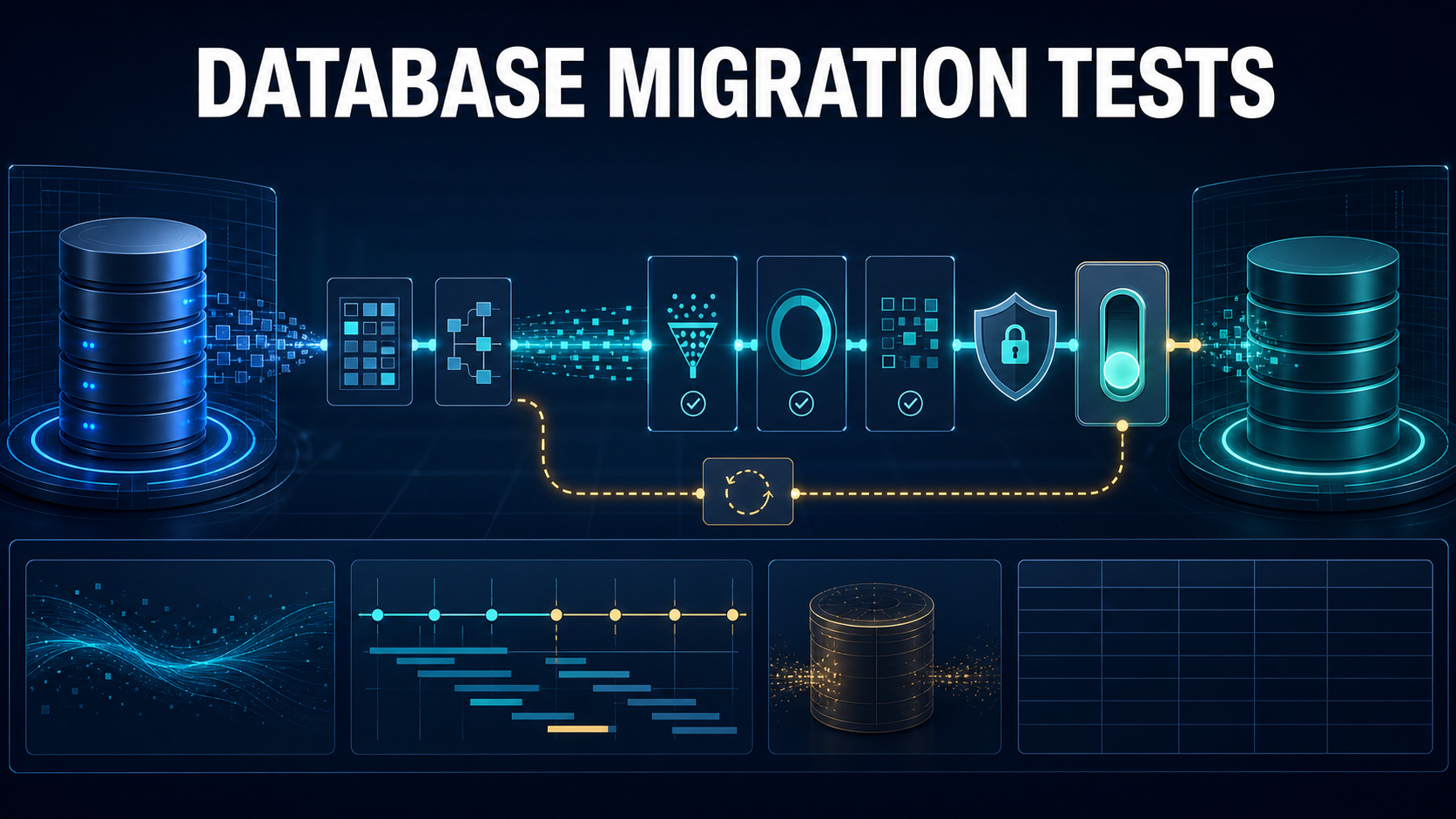
Database migration combines data conversion, replication, application change, governance, security, and business cutover. The platform must prove not only throughput but also semantic fidelity, ongoing change capture, reconciliation, recoverability, and the ability to preserve records and audit obligations.
Do not accept a small clean sample. Rehearse representative large tables, hot tables, large objects, unusual encodings, temporal data, constraints, stored logic, failed transactions, schema changes, network interruption, cutover load, and rollback.
Inventory Source, Target, Dependencies, And Obligations
Define databases, versions, schemas, objects, sizes, growth, data types, large objects, encodings, extensions, procedures, jobs, applications, reports, interfaces, users, permissions, sensitive data, retention, legal holds, audit, downtime, and decommission scope. The buying brief should name users, workflows, data, integrations, administration, exclusions, assumptions, and the condition that changes the requirement.
Require an automated and reviewed inventory, dependency graph, data classification, records decision, downtime target, unsupported-object list, and migration wave plan. Unknown jobs, reports, stored logic, integrations, records, or access paths appear only after cutover and can block decommissioning. Preserve the result in the scored demo, security review, implementation plan, contract, and renewal record so acceptance is auditable.
Prove Schema And Code Conversion Fidelity
Define tables, columns, types, defaults, nulls, keys, constraints, indexes, partitions, views, materialized views, sequences, synonyms, procedures, functions, triggers, packages, collation, time zones, and target equivalents. The buying brief should name users, workflows, data, integrations, administration, exclusions, assumptions, and the condition that changes the requirement.
Require object-by-object conversion report, generated and manually revised code, unsupported exceptions, compile results, semantic test cases, and review ownership. Objects can compile yet behave differently because target types, null handling, transactions, collation, date logic, or optimizer semantics changed. Preserve the result in the scored demo, security review, implementation plan, contract, and renewal record so acceptance is auditable.
Validate Initial Load And Data Fidelity
Define full and incremental loads, ordering, parallelism, large objects, binary data, precision, timestamps, time zones, Unicode, nulls, duplicates, referential integrity, deleted records, errors, rejects, restart, and checkpoints. The buying brief should name users, workflows, data, integrations, administration, exclusions, assumptions, and the condition that changes the requirement.
Require source-to-target counts, checksums, field profiles, rejects, relationship checks, sample records, restart exercise, and complete load reconciliation. Matching row counts can hide truncation, rounding, encoding corruption, wrong time zones, missing large objects, or broken relationships. Preserve the result in the scored demo, security review, implementation plan, contract, and renewal record so acceptance is auditable.
Test Change Data Capture And Synchronization
Define logs, CDC, inserts, updates, deletes, transactions, commit ordering, schema changes, lag, backlog, conflicts, retries, duplicates, source overhead, long transactions, failover, network loss, and resynchronization. The buying brief should name users, workflows, data, integrations, administration, exclusions, assumptions, and the condition that changes the requirement.
Require sustained production-like workload with end-to-end sequence validation, lag percentiles, fault injection, duplicate detection, and verified catch-up. A brief replication demo does not prove that deletes, long transactions, schema changes, source failover, or backlog recovery remain consistent. Preserve the result in the scored demo, security review, implementation plan, contract, and renewal record so acceptance is auditable.
Reconcile Business Results And Application Behavior
Define record counts, checksums, control totals, financial balances, aggregates, keys, orphan checks, critical queries, reports, APIs, user workflows, permissions, concurrency, transactions, plans, latency, batch windows, and first reporting cycle. The buying brief should name users, workflows, data, integrations, administration, exclusions, assumptions, and the condition that changes the requirement.
Require signed technical and business reconciliation, query and workflow results, performance comparison, adjustment log, unresolved variances, and owner acceptance. Technical validation can pass while balances, reports, application semantics, authorization, or performance are wrong. Preserve the result in the scored demo, security review, implementation plan, contract, and renewal record so acceptance is auditable.
Secure Data, Credentials, Operators, And Evidence
Define TLS, encryption at rest, staging files, backups, keys, service accounts, least privilege, temporary access, private networking, masking, nonproduction data, logs, rejected records, support access, regional processing, audit, and deletion. The buying brief should name users, workflows, data, integrations, administration, exclusions, assumptions, and the condition that changes the requirement.
Require security architecture, role tests, secret rotation, encrypted-path evidence, masked logs, audit export, staging cleanup, and temporary-access removal. Migration copies and logs can become an uncontrolled second store of sensitive data with broad administrator access. Preserve the result in the scored demo, security review, implementation plan, contract, and renewal record so acceptance is auditable.
Rehearse Cutover, Rollback, And Legacy Disposition
Define freeze, final sync, validation gates, go or no-go thresholds, maintenance window, routing, DNS, connection strings, credentials, jobs, interfaces, user communications, rollback trigger, reverse sync, backups, legacy read access, retention, archive, and decommission. The buying brief should name users, workflows, data, integrations, administration, exclusions, assumptions, and the condition that changes the requirement.
Require timed dress rehearsal, signed runbook, decision roles, rollback execution, restored service, legacy preservation plan, and post-cutover checklist. A cutover without measured gates and an executed rollback path turns unexpected variance into prolonged outage or irreversible data divergence. Preserve the result in the scored demo, security review, implementation plan, contract, and renewal record so acceptance is auditable.
Model Scale, Operations, And Total Cost
Define throughput, source overhead, target load, network, storage, staging, compute, egress, CDC duration, monitoring, alerts, staffing, conversion remediation, testing, downtime, support, licensing, professional services, extended coexistence, renewal, and exit. The buying brief should name users, workflows, data, integrations, administration, exclusions, assumptions, and the condition that changes the requirement.
Require peak and endurance tests, capacity headroom, operating dashboard, support drill, three-year scenarios, contingency reserve, and artifact export. Egress, coexistence, custom code conversion, repeated rehearsals, performance tuning, and delayed decommissioning can dominate the software price. Preserve the result in the scored demo, security review, implementation plan, contract, and renewal record so acceptance is auditable.
Review The Migration From Object Inventory To Verified Cutover
Prove Scope, Conversion, And Data Fidelity
Inventory Source, Target, Dependencies, And Obligations
Confirm databases, versions, schemas, objects, sizes, growth, data types, large objects, encodings, extensions, procedures, jobs, applications, reports, interfaces, users, permissions, sensitive data, retention, legal holds, audit, downtime, and decommission scope; retain an automated and reviewed inventory, dependency graph, data classification, records decision, downtime target, unsupported-object list, and migration wave plan.
Prove Schema And Code Conversion Fidelity
Confirm tables, columns, types, defaults, nulls, keys, constraints, indexes, partitions, views, materialized views, sequences, synonyms, procedures, functions, triggers, packages, collation, time zones, and target equivalents; retain object-by-object conversion report, generated and manually revised code, unsupported exceptions, compile results, semantic test cases, and review ownership.
Prove Cutover, Recovery, And Lifecycle Accountability
Rehearse Cutover, Rollback, And Legacy Disposition
Confirm freeze, final sync, validation gates, go or no-go thresholds, maintenance window, routing, DNS, connection strings, credentials, jobs, interfaces, user communications, rollback trigger, reverse sync, backups, legacy read access, retention, archive, and decommission; retain timed dress rehearsal, signed runbook, decision roles, rollback execution, restored service, legacy preservation plan, and post-cutover checklist.
Model Scale, Operations, And Total Cost
Confirm throughput, source overhead, target load, network, storage, staging, compute, egress, CDC duration, monitoring, alerts, staffing, conversion remediation, testing, downtime, support, licensing, professional services, extended coexistence, renewal, and exit; retain peak and endurance tests, capacity headroom, operating dashboard, support drill, three-year scenarios, contingency reserve, and artifact export.
Database Migration Software Buying Test Scorecard
| Buying area | What to confirm | Why it matters |
|---|---|---|
| Inventory Source, Target, Dependencies, And Obligations | databases, versions, schemas, objects, sizes, growth, data types, large objects, encodings, extensions, procedures, jobs, applications, reports, interfaces, users, permissions, sensitive data, retention, legal holds, audit, downtime, and decommission scope. | Unknown jobs, reports, stored logic, integrations, records, or access paths appear only after cutover and can block decommissioning. |
| Prove Schema And Code Conversion Fidelity | tables, columns, types, defaults, nulls, keys, constraints, indexes, partitions, views, materialized views, sequences, synonyms, procedures, functions, triggers, packages, collation, time zones, and target equivalents. | Objects can compile yet behave differently because target types, null handling, transactions, collation, date logic, or optimizer semantics changed. |
| Validate Initial Load And Data Fidelity | full and incremental loads, ordering, parallelism, large objects, binary data, precision, timestamps, time zones, Unicode, nulls, duplicates, referential integrity, deleted records, errors, rejects, restart, and checkpoints. | Matching row counts can hide truncation, rounding, encoding corruption, wrong time zones, missing large objects, or broken relationships. |
| Test Change Data Capture And Synchronization | logs, CDC, inserts, updates, deletes, transactions, commit ordering, schema changes, lag, backlog, conflicts, retries, duplicates, source overhead, long transactions, failover, network loss, and resynchronization. | A brief replication demo does not prove that deletes, long transactions, schema changes, source failover, or backlog recovery remain consistent. |
| Reconcile Business Results And Application Behavior | record counts, checksums, control totals, financial balances, aggregates, keys, orphan checks, critical queries, reports, APIs, user workflows, permissions, concurrency, transactions, plans, latency, batch windows, and first reporting cycle. | Technical validation can pass while balances, reports, application semantics, authorization, or performance are wrong. |
| Secure Data, Credentials, Operators, And Evidence | TLS, encryption at rest, staging files, backups, keys, service accounts, least privilege, temporary access, private networking, masking, nonproduction data, logs, rejected records, support access, regional processing, audit, and deletion. | Migration copies and logs can become an uncontrolled second store of sensitive data with broad administrator access. |
Questions To Ask Before Approval
- How will the proposal define databases, versions, schemas, objects, sizes, growth, data types, large objects, encodings, extensions, procedures, jobs, applications, reports, interfaces, users, permissions, sensitive data, retention, legal holds, audit, downtime, and decommission scope and prove it with an automated and reviewed inventory, dependency graph, data classification, records decision, downtime target, unsupported-object list, and migration wave plan?
- How will the proposal define tables, columns, types, defaults, nulls, keys, constraints, indexes, partitions, views, materialized views, sequences, synonyms, procedures, functions, triggers, packages, collation, time zones, and target equivalents and prove it with object-by-object conversion report, generated and manually revised code, unsupported exceptions, compile results, semantic test cases, and review ownership?
- How will the proposal define full and incremental loads, ordering, parallelism, large objects, binary data, precision, timestamps, time zones, Unicode, nulls, duplicates, referential integrity, deleted records, errors, rejects, restart, and checkpoints and prove it with source-to-target counts, checksums, field profiles, rejects, relationship checks, sample records, restart exercise, and complete load reconciliation?
- How will the proposal define logs, CDC, inserts, updates, deletes, transactions, commit ordering, schema changes, lag, backlog, conflicts, retries, duplicates, source overhead, long transactions, failover, network loss, and resynchronization and prove it with sustained production-like workload with end-to-end sequence validation, lag percentiles, fault injection, duplicate detection, and verified catch-up?
- How will the proposal define record counts, checksums, control totals, financial balances, aggregates, keys, orphan checks, critical queries, reports, APIs, user workflows, permissions, concurrency, transactions, plans, latency, batch windows, and first reporting cycle and prove it with signed technical and business reconciliation, query and workflow results, performance comparison, adjustment log, unresolved variances, and owner acceptance?
- How will the proposal define TLS, encryption at rest, staging files, backups, keys, service accounts, least privilege, temporary access, private networking, masking, nonproduction data, logs, rejected records, support access, regional processing, audit, and deletion and prove it with security architecture, role tests, secret rotation, encrypted-path evidence, masked logs, audit export, staging cleanup, and temporary-access removal?
- How will the proposal define freeze, final sync, validation gates, go or no-go thresholds, maintenance window, routing, DNS, connection strings, credentials, jobs, interfaces, user communications, rollback trigger, reverse sync, backups, legacy read access, retention, archive, and decommission and prove it with timed dress rehearsal, signed runbook, decision roles, rollback execution, restored service, legacy preservation plan, and post-cutover checklist?
- How will the proposal define throughput, source overhead, target load, network, storage, staging, compute, egress, CDC duration, monitoring, alerts, staffing, conversion remediation, testing, downtime, support, licensing, professional services, extended coexistence, renewal, and exit and prove it with peak and endurance tests, capacity headroom, operating dashboard, support drill, three-year scenarios, contingency reserve, and artifact export?
Buying Red Flags
A migration estimate without an object and dependency inventory excludes the hardest conversion work.
Row counts alone do not prove precision, encoding, temporal, relationship, business balance, or application fidelity.
A rollback plan that has not restored service in a timed rehearsal is a document, not a recovery capability.
Source Links
- GAO financial system data migration leading practices
- GAO financial data conversion phases and controls
- National Archives electronic records format guidance
- National Archives electronic records system requirements
FAQ
What should database migration software validate?
Validate schemas, code, counts, checksums, field profiles, relationships, business totals, application queries, permissions, performance, CDC ordering, and cutover results.
What is change data capture in migration?
CDC captures committed inserts, updates, and deletes after the initial load so the target can catch up while the source remains active before cutover.
Is zero-downtime migration realistic?
Only for architectures and workloads that support continuous synchronization and safe cutover. Define allowable read and write interruption, lag, freeze, and rollback honestly.
Why keep the legacy database after cutover?
Records, audit, legal, dispute, rollback, or historical access needs may require controlled retention. Define access, duration, cost, and final disposition before migration.
How many migration rehearsals are needed?
Enough to meet timing, fidelity, performance, and rollback criteria consistently with production-representative volume and changes. Do not rely on one clean run.
What proves migration completion?
Signed technical and business reconciliation, accepted application behavior, stable first cycles, closed variances, retained records, removed temporary access, and an approved legacy disposition.
Related Software Buyer Guide Guides
- CRM data migration buying checklist
- Data quality software checklist
- Database activity monitoring checklist
Approve database migration software only when rehearsal proves semantic fidelity, continuous change capture, business reconciliation, secure operations, cutover, rollback, and legacy disposition.