
Short answer: Select digital asset management software after inventorying original images, video, audio, documents, design files and derivatives; migrating a representative dirty library with duplicates, missing metadata and broken relationships; defining controlled descriptive, technical, rights, accessibility and preservation metadata; testing exact, filtered, visual and semantic search against known-find tasks; enforcing ownership, territorial, channel and expiration rights; generating renditions without damaging color, crop, captions or embedded metadata; preserving originals, checksums and version lineage; running submit, review, approve, publish, withdraw and archive workflows; integrating real creative and delivery tools; restricting previews, downloads, shares and bulk exports; load-testing large files and concurrent campaigns; pricing storage, bandwidth, transformations, AI, users and portals; and exporting originals, derivatives, metadata, rights, relationships and audit history. A visually attractive gallery is not enough if expired assets remain downloadable or the original cannot be reconstructed.
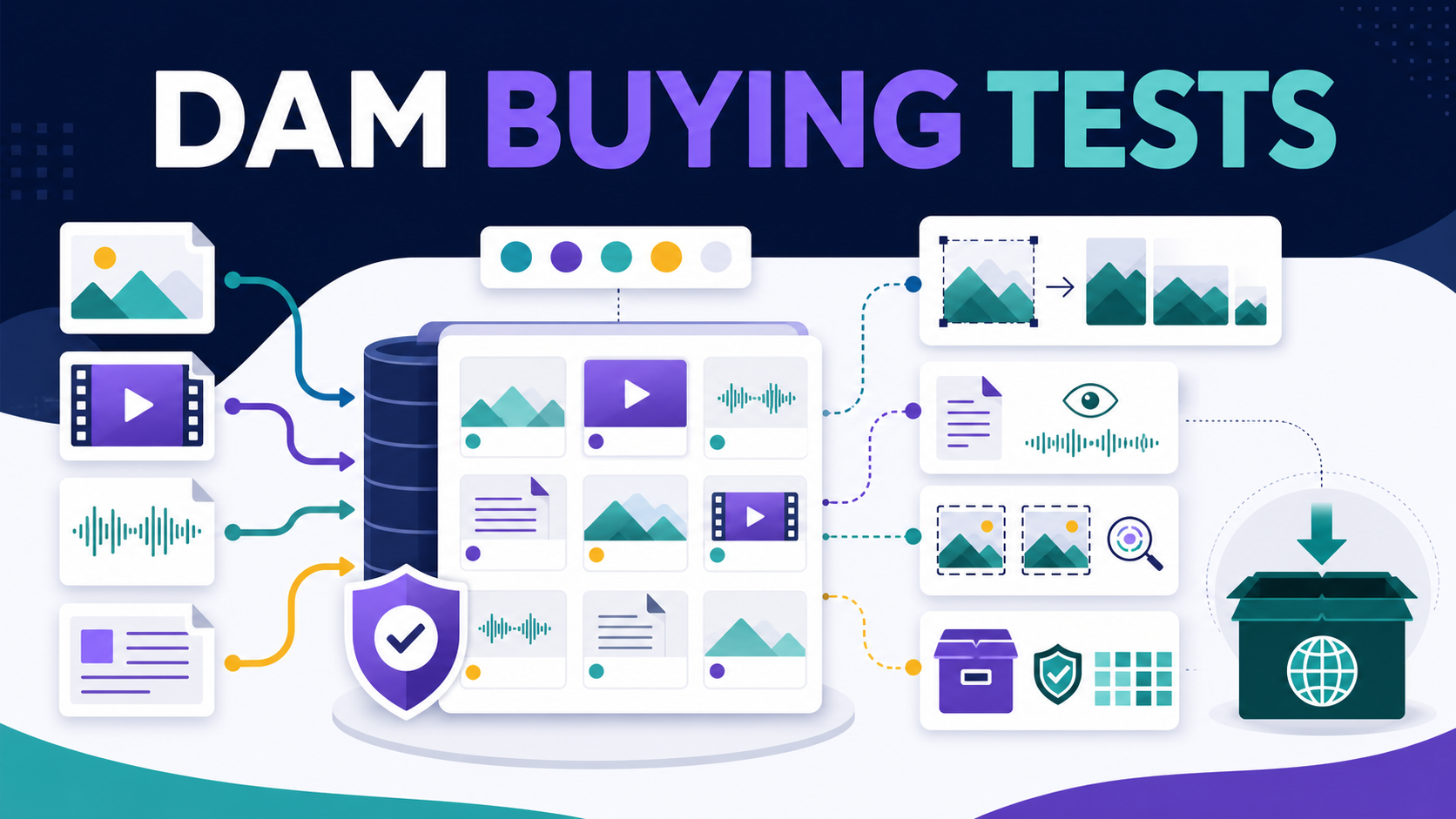
NARA's digital-preservation resources emphasize metadata, significant properties, format risk, checksums, validation and documented ingest actions. IPTC's photo metadata standard supports creation details, identifiers, rights information and accessibility fields. W3C explains that meaningful alternative text makes image information available to screen-reader users and search technologies. Together these provide practical tests for durable, reusable and accessible asset operations.
Use the same files, sizes, codecs, duplicate families, metadata gaps, rights cases, languages, search tasks, renditions, integrations, users and export requirements. Vendor-curated collections and visual-search demos do not reveal migration loss, rights enforcement, performance or long-term portability.
Inventory Originals, Derivatives And Relationships
Classify originals, working files, approved masters, renditions, captions, transcripts, sidecars and published URLs. Identify near-duplicates, alternate edits, campaigns, products and parent-child relationships before migration.
Record hashes, format, codec, dimensions, duration, color profile and other significant properties. Test unsupported, corrupt, password-protected and unusually large files. The platform should quarantine failures without silently dropping metadata or relationships.
Design Metadata, Search And Accessibility
Separate descriptive, technical, administrative, rights, accessibility and preservation fields. Use controlled vocabularies and stable identifiers where consistency matters, while keeping source, confidence, reviewer and change history for machine-generated values.
Run a known-find test with exact names, filters, rights, campaign, product, locale, visual similarity and content concepts. Measure precision and time to the correct approved asset. Require meaningful alt text, extended descriptions, captions or transcripts where the destination needs them.
Enforce Rights, Renditions And Workflow
Model owner, license, talent or property releases, territory, channel, audience, start, expiry and restrictions. Attempt prohibited previews, downloads, shares and publication through both UI and API. Expiration must withdraw or alert reliably without destroying preservation copies.
Generate crops, thumbnails, web images, print files, video proxies and delivery packages. Verify color, aspect ratio, safe area, audio, captions and embedded metadata. Run review, approval, correction, replacement, takedown and archive flows with explicit owners and immutable history.
Validate Integrations, Preservation And Recovery
Connect real design, office, PIM, CMS, social and delivery tools. Test check-in, duplicate upload, version conflict, metadata mapping, credential expiry, retries and destination deletion. Track which approved version each public URL serves.
Preserve original bitstreams and hashes, document transformations and test restoration from backup. Export preservation and rights metadata separately from vendor interfaces. Periodically identify obsolete or risky formats and verify that migration retains significant properties.
Bound Access, Cost And Exit
Restrict sensitive campaigns, unreleased products, licensed materials, originals and bulk operations. Audit searches where needed, previews, downloads, shares, transformations, approvals, metadata changes and administrative access. Test expiring external links.
Model original and derivative storage, egress, CDN, transformations, transcription, AI tagging, users, portals, sandboxes and migration services. Export originals, derivatives, metadata schemas, controlled vocabularies, rights, relationships, versions, hashes and audit history, then restore a sample library with another tool.
Normalize DAM Evaluations
Normalize Library
Use One Asset Set
Compare identical originals, derivatives, formats, sizes, duplicates and corrupt files.
Use One Metadata Model
Apply the same descriptive, rights, accessibility and preservation fields.
Normalize Operations
Use One Search Test
Measure identical known-find tasks, filters, relevance and approved-version results.
Use One Rights Test
Attempt the same restricted use, expiry, share, API and takedown scenarios.
Normalize Portability
Use One Rendition Set
Compare the same crops, codecs, captions, metadata and quality checks.
Use One Exit Test
Restore the same assets, schemas, rights, lineage, hashes and history elsewhere.
DAM Software Scorecard
| Buying area | What to confirm | Why it matters |
|---|---|---|
| Asset integrity | Originals, hashes, formats, lineage and failures | Prevents silent migration loss |
| Metadata | Descriptions, rights, accessibility and preservation | Keeps context usable and portable |
| Search | Known-find relevance, filters, versions and permissions | Measures retrieval rather than demo appeal |
| Rights | Owner, scope, territory, channel, dates and enforcement | Reduces unauthorized use |
| Renditions | Crop, color, codec, captions and embedded metadata | Protects delivery quality |
| Workflow | Review, approval, correction, withdrawal and history | Controls publication lifecycle |
| Resilience | Backup restore, checksums, format risk and URLs | Preserves durable access |
| Commercial | Storage, egress, AI, transforms, users and export | Reveals total cost and lock-in |
Questions To Ask Before Shortlisting
- Which files are originals, derivatives and working copies?
- How are hashes, formats and significant properties verified?
- Which metadata fields and vocabularies are authoritative?
- Can users find a known approved asset quickly?
- How are rights restrictions enforced through API and shares?
- What happens automatically at license expiration?
- Do renditions preserve color, crop, captions and metadata?
- How are accessible descriptions and transcripts governed?
- Can public URLs be traced to an approved version?
- How are corrupt files and failed migrations quarantined?
- What drives storage, egress, AI and transformation cost?
- Can a sample library be fully restored outside the vendor?
Buying Red Flags
Migration success is reported by file count without hashes, metadata and relationship reconciliation.
Rights are advisory tags and do not block API downloads or public sharing.
AI tags overwrite reviewed metadata without source, confidence or history.
Renditions drop captions, color profiles, accessibility fields or embedded rights.
Export excludes originals, relationships, controlled vocabularies, hashes or audit history.
Source Links
- NARA: Digital Preservation Framework
- NARA: Metadata Requirements For Permanent Electronic Records
- IPTC: Photo Metadata Standard
- W3C WAI: Introduction To Web Accessibility
FAQ
What is digital asset management software?
DAM software governs media files, metadata, rights, versions, approvals, transformations, discovery and distribution across their lifecycle.
How is DAM different from cloud storage?
Cloud storage holds files; a DAM adds structured metadata, rights, search, renditions, workflow, publication integrations and asset-level lineage.
Why use file hashes in a DAM migration?
Hashes help prove that originals arrived intact, identify exact duplicates and detect later corruption without relying on names or thumbnails.
Should AI tags be trusted automatically?
They should retain source and confidence, be evaluated on the buyer's assets and require review where errors affect rights, accessibility or discovery.
What accessibility fields should a DAM support?
Needs vary, but buyers should test meaningful alt text, extended descriptions, captions and transcripts and confirm that destinations receive them correctly.
What makes a DAM export complete?
A usable export includes originals, derivatives, metadata, vocabularies, rights, relationships, versions, hashes and audit history in documented formats.
Related Software Buying Guides
- Product Information Management Software Buying Tests
- Document Management Software Checklist
- Cloud Storage Software Checklist
A DAM is valuable only when the correct asset, rights, context, rendition and evidence travel together from creation through archive.