
Short answer: Buy marketing automation software only after a proof of value uses representative contacts, consent states, channels, segments, campaigns, CRM changes, and failure cases. Verify that the platform records source and purpose, blocks ineligible recipients before every send, preserves suppression across imports and integrations, versions journey logic, reconciles delivery events, measures experiments separately from attribution, restricts sensitive data and powerful actions, and exports contacts, consent evidence, templates, logic, and history without lock-in. A polished campaign builder is not evidence that the operating system around it is lawful, deliverable, measurable, and recoverable.
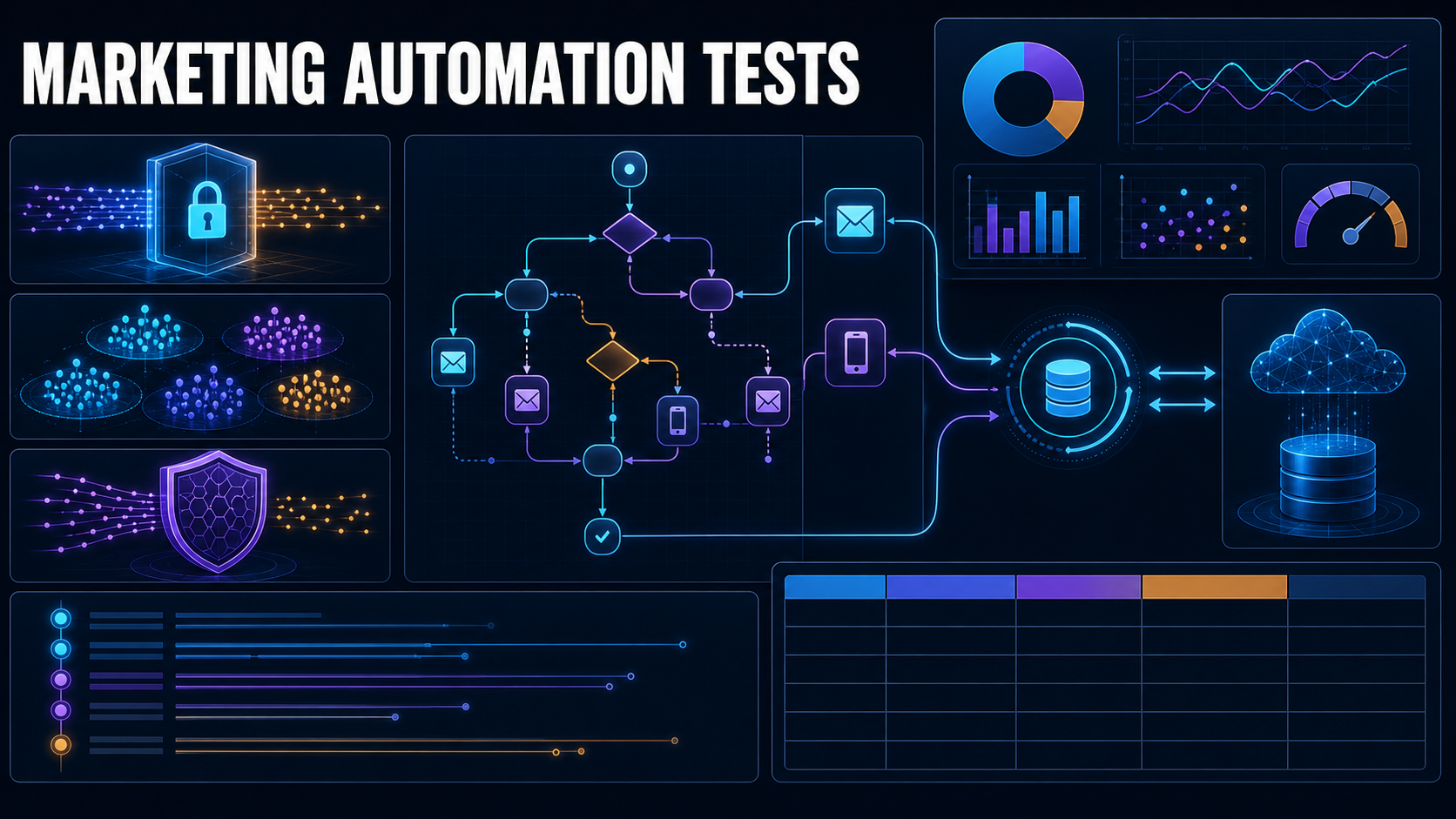
Marketing automation software joins personal data, audience logic, messaging, CRM state, and measurement. That concentration can improve execution, but a single stale consent record or broken sync can scale an error across every channel.
Do not evaluate only a vendor demo list. Seed opt-outs, conflicting consent, duplicate identities, late CRM updates, bounced addresses, quiet hours, journey re-entry, channel failure, and deletion requests, then trace each outcome.
Prove Data Sources, Identity, And CRM Synchronization
Define forms, CRM, commerce, product events, imports, APIs, identities, field ownership, schema changes, duplicates, conflicts, latency, retries, and deletion. The buying brief should name users, workflows, data, integrations, administration, exclusions, assumptions, and the condition that changes the requirement.
Require source-to-field map, duplicate corpus, conflict rules, sync latency percentiles, retry results, and reconciled record counts. A connector can look healthy while overwriting fresher CRM values, multiplying contacts, or dropping consent context. Preserve the result in the scored demo, security review, implementation plan, contract, and renewal record so acceptance is auditable.
Enforce Consent, Purpose, Preference, And Suppression
Define collection source, notice, lawful basis, channel consent, purpose, regional rules, opt-out, objection, suppression, quiet hours, sensitive data, retention, and deletion. The buying brief should name users, workflows, data, integrations, administration, exclusions, assumptions, and the condition that changes the requirement.
Require policy matrix with allowed and denied contacts, timestamped consent evidence, opt-out propagation, suppression import test, and deletion trace. A visible unsubscribe field is insufficient when imports, cloned journeys, or downstream tools can still contact the person. Preserve the result in the scored demo, security review, implementation plan, contract, and renewal record so acceptance is auditable.
Validate Segments, Scores, And Eligibility Rules
Define filters, calculated fields, lead scores, recency, frequency, exclusions, nested logic, time zones, predictions, count previews, versions, approvals, and rollback. The buying brief should name users, workflows, data, integrations, administration, exclusions, assumptions, and the condition that changes the requirement.
Require known-population test cases, repeatable counts, score explanations, version diff, exclusion evidence, and rollback. Opaque or mutable logic can silently include ineligible people and cannot explain why a person entered a campaign. Preserve the result in the scored demo, security review, implementation plan, contract, and renewal record so acceptance is auditable.
Stress-Test Journeys, Timing, And State Changes
Define triggers, waits, branches, re-entry, exits, goals, concurrency, time zones, daylight saving, deduplication, idempotency, late events, edits, pauses, and recovery. The buying brief should name users, workflows, data, integrations, administration, exclusions, assumptions, and the condition that changes the requirement.
Require scenario matrix with expected paths, simulated clock runs, duplicate-event tests, mid-journey edit results, and recovery evidence. A simple happy path hides duplicate sends, skipped waits, stale branches, and contacts stranded after an edit. Preserve the result in the scored demo, security review, implementation plan, contract, and renewal record so acceptance is auditable.
Verify Channel Delivery And Reputation Controls
Define email, SMS, push, webhooks, authentication, bounce handling, complaints, throttles, frequency caps, quiet hours, sender domains, retries, and provider feedback. The buying brief should name users, workflows, data, integrations, administration, exclusions, assumptions, and the condition that changes the requirement.
Require seed-list delivery tests, authentication evidence, bounce and complaint workflows, throttle test, receipt reconciliation, and failure recovery. The platform may report sent even when a provider rejects, delays, duplicates, or routes a message without the latest suppression. Preserve the result in the scored demo, security review, implementation plan, contract, and renewal record so acceptance is auditable.
Separate Attribution From Incremental Measurement
Define campaign IDs, conversions, windows, identity, deduplication, channel overlap, holdouts, randomized tests, control groups, metric definitions, latency, and cost. The buying brief should name users, workflows, data, integrations, administration, exclusions, assumptions, and the condition that changes the requirement.
Require metric lineage, conversion reconciliation, holdout workflow, known test campaign, documented assumptions, and reproducible results. Attributed revenue is not proof that automation caused incremental revenue, especially when the same platform selects and scores the audience. Preserve the result in the scored demo, security review, implementation plan, contract, and renewal record so acceptance is auditable.
Secure Operators, Content, Connectors, And Audit Evidence
Define roles, approvals, service accounts, API scopes, connector secrets, template injection, tracking data, exports, support access, audit logs, incident response, and tenant separation. The buying brief should name users, workflows, data, integrations, administration, exclusions, assumptions, and the condition that changes the requirement.
Require role tests, approval bypass test, secret rotation, audit export, malicious-input test, and incident exercise. Broad campaign rights or exposed connectors can turn one compromised account into mass messaging and customer-data access. Preserve the result in the scored demo, security review, implementation plan, contract, and renewal record so acceptance is auditable.
Model Operations, Portability, And Total Cost
Define contacts, sends, channels, events, seats, domains, add-ons, data storage, implementation, content operations, deliverability, privacy review, support, renewal, and exit. The buying brief should name users, workflows, data, integrations, administration, exclusions, assumptions, and the condition that changes the requirement.
Require three-year volume scenarios, operating RACI, measured campaign effort, contract protections, full export, and replacement rehearsal. Contact growth, premium channels, services, and undocumented journey logic can make the renewal and exit cost larger than the license. Preserve the result in the scored demo, security review, implementation plan, contract, and renewal record so acceptance is auditable.
Review The Platform From Consent Capture To Verified Exit
Prove Eligibility, Journey Logic, And Delivery
Prove Data Sources, Identity, And CRM Synchronization
Confirm forms, CRM, commerce, product events, imports, APIs, identities, field ownership, schema changes, duplicates, conflicts, latency, retries, and deletion; retain source-to-field map, duplicate corpus, conflict rules, sync latency percentiles, retry results, and reconciled record counts.
Enforce Consent, Purpose, Preference, And Suppression
Confirm collection source, notice, lawful basis, channel consent, purpose, regional rules, opt-out, objection, suppression, quiet hours, sensitive data, retention, and deletion; retain policy matrix with allowed and denied contacts, timestamped consent evidence, opt-out propagation, suppression import test, and deletion trace.
Prove Measurement, Security, And Sustainable Operations
Secure Operators, Content, Connectors, And Audit Evidence
Confirm roles, approvals, service accounts, API scopes, connector secrets, template injection, tracking data, exports, support access, audit logs, incident response, and tenant separation; retain role tests, approval bypass test, secret rotation, audit export, malicious-input test, and incident exercise.
Model Operations, Portability, And Total Cost
Confirm contacts, sends, channels, events, seats, domains, add-ons, data storage, implementation, content operations, deliverability, privacy review, support, renewal, and exit; retain three-year volume scenarios, operating RACI, measured campaign effort, contract protections, full export, and replacement rehearsal.
Marketing Automation Software Buying Test Scorecard
| Buying area | What to confirm | Why it matters |
|---|---|---|
| Prove Data Sources, Identity, And CRM Synchronization | forms, CRM, commerce, product events, imports, APIs, identities, field ownership, schema changes, duplicates, conflicts, latency, retries, and deletion. | A connector can look healthy while overwriting fresher CRM values, multiplying contacts, or dropping consent context. |
| Enforce Consent, Purpose, Preference, And Suppression | collection source, notice, lawful basis, channel consent, purpose, regional rules, opt-out, objection, suppression, quiet hours, sensitive data, retention, and deletion. | A visible unsubscribe field is insufficient when imports, cloned journeys, or downstream tools can still contact the person. |
| Validate Segments, Scores, And Eligibility Rules | filters, calculated fields, lead scores, recency, frequency, exclusions, nested logic, time zones, predictions, count previews, versions, approvals, and rollback. | Opaque or mutable logic can silently include ineligible people and cannot explain why a person entered a campaign. |
| Stress-Test Journeys, Timing, And State Changes | triggers, waits, branches, re-entry, exits, goals, concurrency, time zones, daylight saving, deduplication, idempotency, late events, edits, pauses, and recovery. | A simple happy path hides duplicate sends, skipped waits, stale branches, and contacts stranded after an edit. |
| Verify Channel Delivery And Reputation Controls | email, SMS, push, webhooks, authentication, bounce handling, complaints, throttles, frequency caps, quiet hours, sender domains, retries, and provider feedback. | The platform may report sent even when a provider rejects, delays, duplicates, or routes a message without the latest suppression. |
| Separate Attribution From Incremental Measurement | campaign IDs, conversions, windows, identity, deduplication, channel overlap, holdouts, randomized tests, control groups, metric definitions, latency, and cost. | Attributed revenue is not proof that automation caused incremental revenue, especially when the same platform selects and scores the audience. |
Questions To Ask Before Approval
- How will the proposal define forms, CRM, commerce, product events, imports, APIs, identities, field ownership, schema changes, duplicates, conflicts, latency, retries, and deletion and prove it with source-to-field map, duplicate corpus, conflict rules, sync latency percentiles, retry results, and reconciled record counts?
- How will the proposal define collection source, notice, lawful basis, channel consent, purpose, regional rules, opt-out, objection, suppression, quiet hours, sensitive data, retention, and deletion and prove it with policy matrix with allowed and denied contacts, timestamped consent evidence, opt-out propagation, suppression import test, and deletion trace?
- How will the proposal define filters, calculated fields, lead scores, recency, frequency, exclusions, nested logic, time zones, predictions, count previews, versions, approvals, and rollback and prove it with known-population test cases, repeatable counts, score explanations, version diff, exclusion evidence, and rollback?
- How will the proposal define triggers, waits, branches, re-entry, exits, goals, concurrency, time zones, daylight saving, deduplication, idempotency, late events, edits, pauses, and recovery and prove it with scenario matrix with expected paths, simulated clock runs, duplicate-event tests, mid-journey edit results, and recovery evidence?
- How will the proposal define email, SMS, push, webhooks, authentication, bounce handling, complaints, throttles, frequency caps, quiet hours, sender domains, retries, and provider feedback and prove it with seed-list delivery tests, authentication evidence, bounce and complaint workflows, throttle test, receipt reconciliation, and failure recovery?
- How will the proposal define campaign IDs, conversions, windows, identity, deduplication, channel overlap, holdouts, randomized tests, control groups, metric definitions, latency, and cost and prove it with metric lineage, conversion reconciliation, holdout workflow, known test campaign, documented assumptions, and reproducible results?
- How will the proposal define roles, approvals, service accounts, API scopes, connector secrets, template injection, tracking data, exports, support access, audit logs, incident response, and tenant separation and prove it with role tests, approval bypass test, secret rotation, audit export, malicious-input test, and incident exercise?
- How will the proposal define contacts, sends, channels, events, seats, domains, add-ons, data storage, implementation, content operations, deliverability, privacy review, support, renewal, and exit and prove it with three-year volume scenarios, operating RACI, measured campaign effort, contract protections, full export, and replacement rehearsal?
Buying Red Flags
A campaign builder demo without opt-out, suppression, and duplicate-event tests does not prove safe execution.
A single revenue attribution number without metric lineage or controls does not prove incremental impact.
A vendor that cannot export consent evidence, journey versions, and activity history creates operational and compliance lock-in.
Source Links
- FTC CAN-SPAM compliance guide
- NIST Privacy Framework
- ICO direct marketing guidance
- ICO electronic mail marketing guidance
FAQ
How is marketing automation different from CRM?
CRM manages relationship and pipeline records; marketing automation executes audience, journey, messaging, and measurement workflows. Test field ownership and synchronization between them.
Does marketing automation software guarantee compliance?
No. The organization remains responsible for lawful basis, consent where required, truthful messages, preferences, suppression, security, retention, and accountable review.
What should a proof of value include?
Use real-shaped but safe data, competing consent states, duplicates, journey changes, channel failures, bounces, opt-outs, deletions, and measured end-to-end reconciliation.
How should deliverability be evaluated?
Verify sender authentication, list hygiene, bounce and complaint handling, throttles, reputation monitoring, provider receipts, and recovery rather than relying on a sent count.
Can attribution dashboards prove ROI?
They allocate credit under chosen rules. Credible incremental impact requires suitable controls such as randomized holdouts plus reconciled cost and outcome data.
What must be exportable before signing?
Require contacts, source and consent evidence, preferences, suppression, schemas, assets, templates, journey logic and versions, events, audit history, and deletion evidence in usable formats.
Related Software Buyer Guide Guides
- CRM software migration checklist
- Consent management software checklist
- Workflow automation software checklist
Approve marketing automation only when eligibility, suppression, journey state, delivery, CRM synchronization, measurement, and recovery stay correct under real operating change.