
Short answer: Select a vendor management system after standardizing real requisitions, rate cards, supplier tiers, work locations, skills and approval routes; onboarding staffing firms and subcontractors through risk-based due diligence; routing worker classification and joint-employment questions to qualified legal and HR review rather than software labels; validating identity, screening, insurance, training and credential expiry; provisioning least-privilege physical and digital access with end dates; matching assignments, time, expenses, overtime, purchase orders and invoices; testing rate changes, tenure rules, extensions, replacements and early termination; measuring supplier quality, diversity, fill time and worker outcomes with defined data; reconciling VMS, HR, identity, procurement, finance and facility systems; offboarding workers and suppliers across all downstream access; pricing workers, suppliers, transactions, integrations and managed services; and exporting requisitions, submissions, assignments, credentials, time, invoices, performance, access and audit history. A lower staffing rate is not savings when classification, access, billing or supplier risk is uncontrolled.
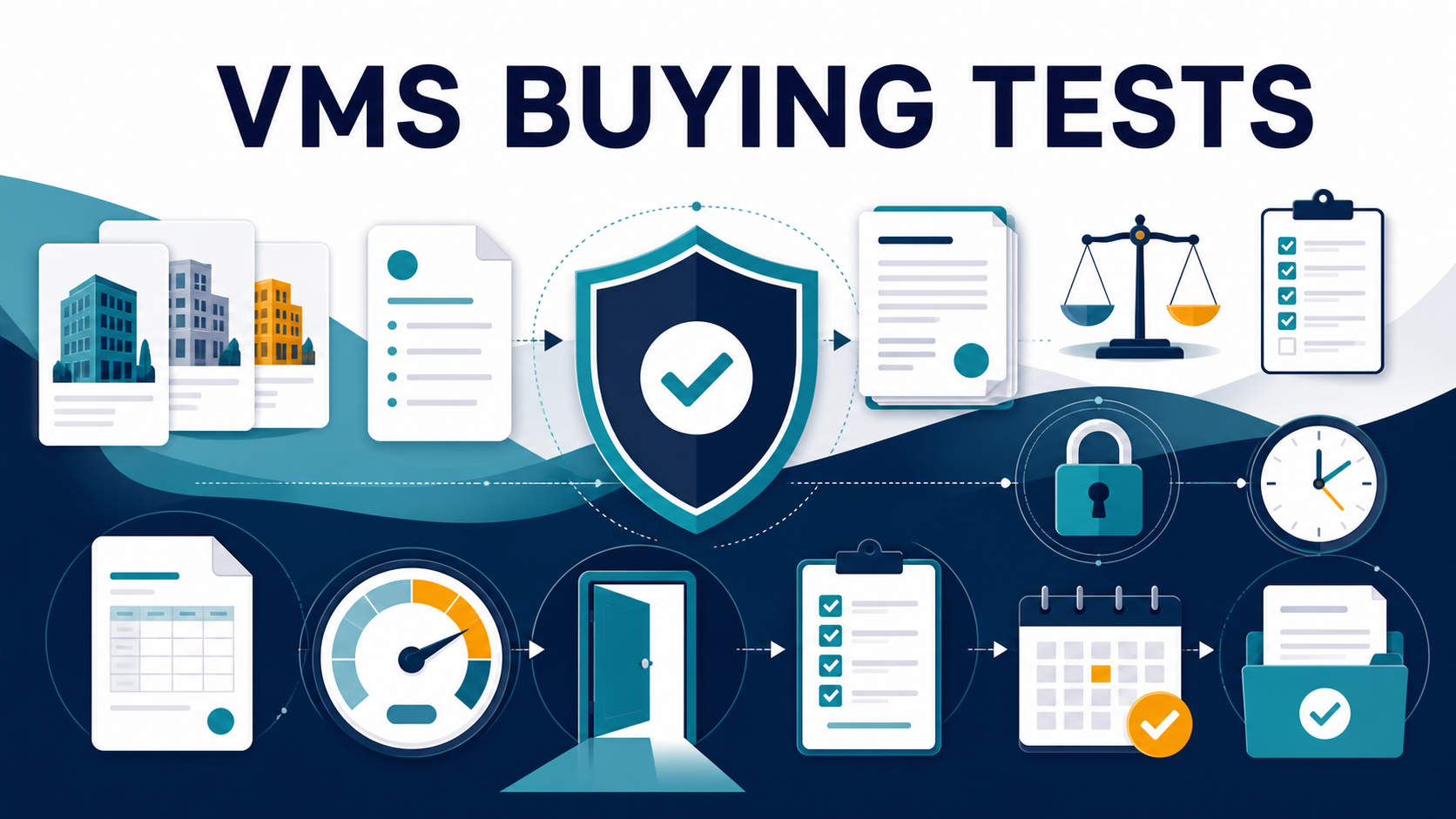
NIST SP 800-161 describes a systematic approach to identifying, assessing and mitigating cybersecurity supply-chain risk, including third-party services and personnel. U.S. Department of Labor material emphasizes that worker status depends on the reality of the relationship rather than a contract label, and current enforcement guidance can change. EEOC guidance also addresses contingent workers and staffing firms. A VMS should route evidence and approvals; it should not claim to decide legal status automatically.
Use the same requisitions, supplier tiers, rate cards, worker scenarios, locations, credentials, access systems, time records, invoice exceptions, extensions, offboarding cases, integrations and cost horizon. A clean requisition-to-start demo does not expose misclassification, duplicate workers, credential expiry, access leakage or reconciliation failures.
Model Requisitions, Suppliers And Due Diligence
Create representative requisitions for hourly, milestone, remote, on-site, high-privilege and regulated work. Normalize title, skills, location, schedule, rate range, duration, budget, approvals and required controls so suppliers compete on the same request.
Assess supplier ownership, subcontracting tiers, insurance, security, resilience, sanctions or conflicts where relevant, and prior performance. Risk depth should match the service and access. Record evidence, reviewer, expiry, exceptions and remediation instead of one permanent risk badge.
Route Classification, Onboarding And Access
Capture facts relevant to worker classification and co-employment review, but keep the legal determination with accountable experts. Test scenarios where actual direction, duration or integration changes after onboarding and requires reassessment.
Verify identity, screening, agreements, training, licenses and site requirements before start. Provision role- and assignment-bound access with owner, start, end and periodic review. Test replacements, transfers, extensions and emergency starts without leaving orphan accounts.
Reconcile Time, Rates And Invoices
Apply rate cards, overtime, shift differentials, expenses, taxes, markup, discounts, currency and effective dates to a golden set. Separate client-approved time from supplier-submitted time and preserve every correction and approval.
Match requisition, assignment, purchase order, time, expense and invoice line by line. Test duplicates, retroactive changes, partial periods, rejected time and credit notes. The system should explain holds and prevent the same work from being paid twice.
Measure Performance And Offboarding
Define fill time, submission quality, start reliability, assignment completion, incidents, turnover and worker feedback consistently. Segment by comparable work and avoid using sensitive attributes or opaque scores in decisions without appropriate review.
Trigger offboarding from assignment end, termination, supplier suspension and inactivity. Revoke application, network, badge, device and facility access; recover assets; close time and invoices; preserve records; and confirm completion in connected systems.
Govern Integration, Cost And Exit
Reconcile worker, supplier, assignment and status identifiers across HR, identity, procurement, finance, facilities and security. Test retries, duplicates, delayed events, merged suppliers and source outages. Restrict sensitive worker data, rates and bulk exports.
Model charges for workers, suppliers, transactions, modules, integrations, regions and managed-service percentages. Export requisitions, submissions, suppliers, due diligence, assignments, credentials, access, time, invoices, performance, documents and audit history, then recreate active assignments elsewhere.
Normalize VMS Evaluations
Normalize Supply
Use One Requisition Set
Compare identical roles, locations, rates, durations, controls and approval routes.
Use One Supplier Risk Model
Apply the same service tiers, evidence, expiry, subcontracting and remediation tests.
Normalize Workforce Operations
Use One Assignment Set
Exercise classification review, credentials, access, changes, extensions and replacements.
Use One Financial Set
Recalculate the same time, rates, expenses, markups, invoices and corrections.
Normalize Closure
Use One Offboarding Test
Revoke identical systems, badges, devices and downstream identities.
Use One Exit Test
Recreate the same suppliers, assignments, evidence, balances and history elsewhere.
Vendor Management System Scorecard
| Buying area | What to confirm | Why it matters |
|---|---|---|
| Requisitions | Roles, skills, location, rates, duration and approvals | Creates comparable supplier submissions |
| Supplier risk | Evidence, tiers, subcontractors, expiry and remediation | Makes due diligence risk-based and current |
| Worker status | Facts, accountable review, changes and evidence | Avoids treating a software label as legal advice |
| Onboarding | Identity, screening, training, credentials and access | Prevents unqualified or overprivileged starts |
| Financial | Time, rates, expenses, PO, invoice and reconciliation | Controls leakage and duplicate payment |
| Performance | Comparable metrics, incidents, outcomes and feedback | Supports defensible supplier decisions |
| Offboarding | Accounts, badges, devices, assets and final records | Closes third-party access promptly |
| Commercial | Workers, suppliers, modules, services and export | Reveals total cost and lock-in |
Questions To Ask Before Shortlisting
- Which contingent-work models and locations are in scope?
- How are supplier and subcontractor risks tiered?
- Who owns worker-classification decisions and reassessment?
- Which credentials must be valid before start?
- How is access tied to assignment dates and role?
- Can every rate and invoice be recalculated?
- How are duplicate workers, time and invoices detected?
- Which supplier metrics are truly comparable?
- What triggers immediate offboarding?
- Can connected systems prove access revocation?
- What modules and managed services drive cost?
- Can active assignments and full history be reconstructed after export?
Buying Red Flags
The platform promises automatic worker classification from a short questionnaire.
Supplier due diligence is a one-time badge without evidence expiry or service-tier context.
Digital and physical access are not bound to assignment end dates.
Invoice matching stops at totals and cannot explain line-level rate or time differences.
Export omits supplier evidence, credentials, access, corrections or audit history.
Source Links
- NIST: Cybersecurity Supply Chain Risk Management Practices
- NIST: Cybersecurity Supply Chain Risk Management Glossary
- U.S. Department Of Labor: Misclassification Myths
- EEOC: Guidance Including Contingent Workers
FAQ
What is a vendor management system?
A VMS governs contingent-work requisitions, suppliers, submissions, assignments, credentials, time, rates, invoices, performance and offboarding.
Can a VMS determine independent-contractor status?
It can collect facts and route review, but legal classification depends on applicable law and the real working relationship, not the software label.
Why connect a VMS to identity systems?
Assignment status and dates can drive least-privilege access, reviews and prompt offboarding across applications, networks and facilities.
What is supplier-tier due diligence?
It scales evidence and review to the service's access, criticality, data, geography, subcontracting and operational risk.
How should VMS invoice matching work?
It should reconcile assignment, PO, approved time, expenses, rates, markups and invoice lines and explain every exception.
What belongs in a VMS export?
Requisitions, submissions, suppliers, risk evidence, assignments, credentials, access, time, invoices, performance, documents and audit history.
Related Software Buying Guides
- Procurement Software Checklist
- Third-Party Risk Management Software Checklist
- Identity Governance Software Checklist
A VMS is not a supplier directory; it is the evidence chain that connects approved work, qualified providers, bounded access, correct payment and complete offboarding.