Short answer: Buy a low-code or no-code platform only after a proof of value builds, tests, deploys, changes, operates, exports, and retires representative internal and external applications. Inventory every maker, app, environment, component, connector, secret, identity, data source, endpoint, dependency, and owner; enforce least privilege and separation of duties; test generated and custom logic for access control, injection, error handling, and data leakage; prove versioning, automated tests, approvals, rollback, monitoring, incident response, and vulnerability handling; and rehearse data and logic export. Fast building without lifecycle governance creates fast-growing shadow software.
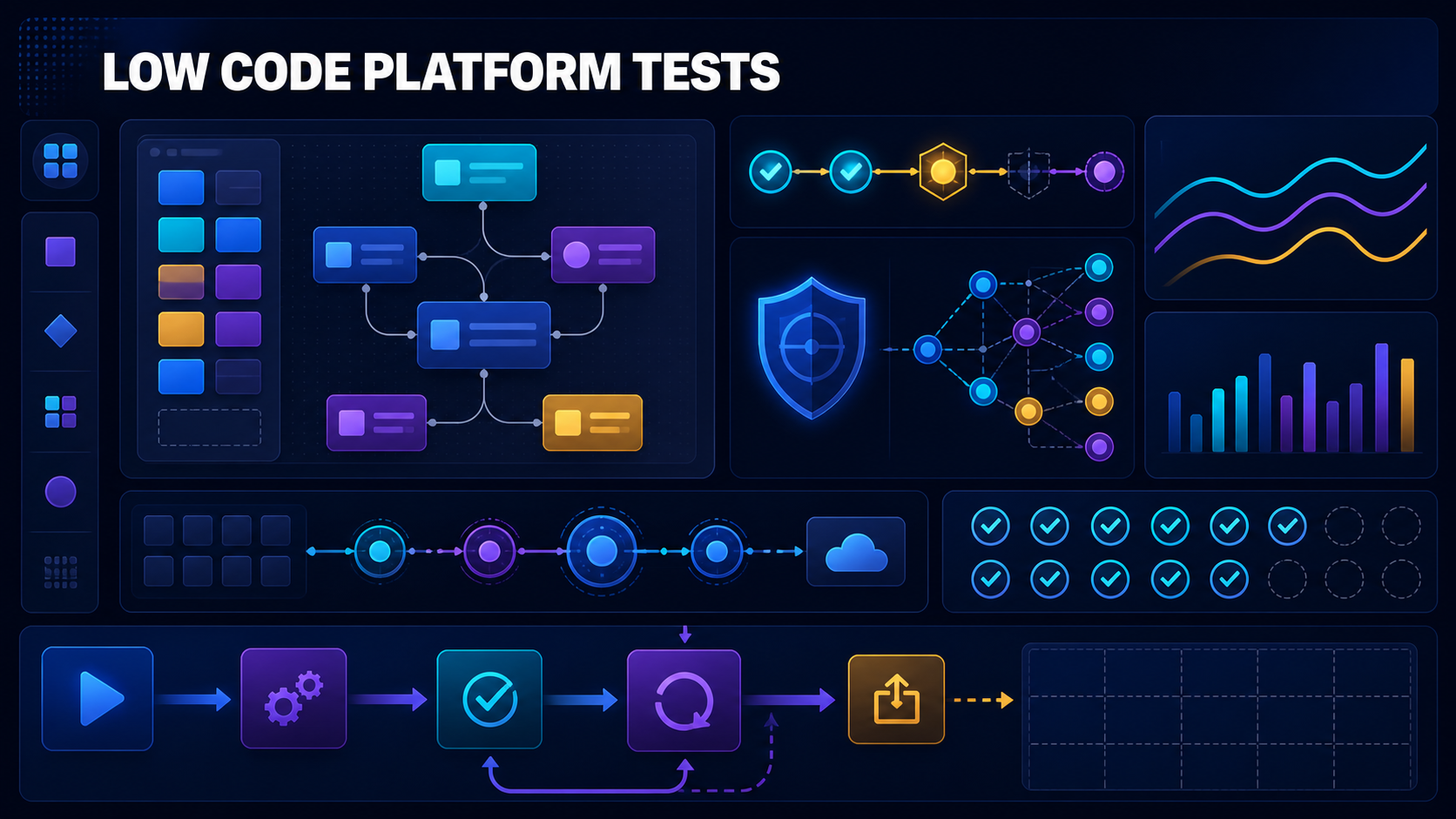
Low-code and no-code platforms move software creation closer to business teams through visual models, components, connectors, and generated logic. The same abstraction can hide insecure defaults, dependencies, privileges, and lock-in from makers and reviewers.
Do not evaluate only a simple internal form. Build an authenticated external workflow with sensitive fields, multiple roles, API calls, untrusted input, approvals, background jobs, schema changes, connector failure, concurrent updates, promotion between environments, rollback, monitoring, deletion, and exit.
Prove Tenant, Maker, App, Environment, And Owner Governance
Define maker eligibility, app inventory, owners, purpose, risk tier, data classification, environments, naming, templates, components, exceptions, inactive apps, orphaning, and retirement. The buying brief should name users, workflows, data, integrations, administration, exclusions, assumptions, and the condition that changes the requirement.
Require complete inventory, owner and risk mapping, prohibited creation tests, orphan workflow, review cadence, and retirement evidence. Citizen development becomes shadow IT when nobody can enumerate apps, privileges, dependencies, data, owners, and production exposure. Preserve the result in the scored demo, security review, implementation plan, contract, and renewal record so acceptance is auditable.
Validate Identity, Roles, Objects, Records, And Sharing
Define authentication, federation, guest and anonymous users, maker and admin roles, object and record authorization, field security, sharing links, service accounts, delegation, and tenant separation. The buying brief should name users, workflows, data, integrations, administration, exclusions, assumptions, and the condition that changes the requirement.
Require role-object-action matrix, cross-record and cross-tenant tests, anonymous endpoint review, privilege escalation tests, and access recertification. A correct screen can still call an endpoint or connector that exposes another user's record or the entire data source. Preserve the result in the scored demo, security review, implementation plan, contract, and renewal record so acceptance is auditable.
Test Data Models, Validation, Logic, And Concurrency
Define types, constraints, relationships, transactions, validation, calculated fields, workflow state, untrusted input, injection, concurrency, idempotency, errors, schema changes, and migration. The buying brief should name users, workflows, data, integrations, administration, exclusions, assumptions, and the condition that changes the requirement.
Require boundary and malicious-input set, concurrent update tests, failure injection, schema migration rehearsal, and reconciled outcomes. Platform syntax and generated queries can introduce injection, partial writes, race conditions, and silent data corruption. Preserve the result in the scored demo, security review, implementation plan, contract, and renewal record so acceptance is auditable.
Inspect Components, Templates, Connectors, APIs, And Supply Chain
Define marketplace assets, custom code, packages, dependencies, provenance, updates, permissions, secrets, API scopes, webhooks, rate limits, versioning, vulnerabilities, and removal. The buying brief should name users, workflows, data, integrations, administration, exclusions, assumptions, and the condition that changes the requirement.
Require component bill, provenance and permission review, secret rotation, API abuse tests, update rehearsal, vulnerability response, and removal test. A trusted-looking template or connector can carry hidden code, excessive privileges, vulnerable dependencies, or breaking updates. Preserve the result in the scored demo, security review, implementation plan, contract, and renewal record so acceptance is auditable.
Prove Development, Testing, Approval, Release, And Rollback
Define requirements, versions, source representation, branching, diffs, automated tests, static and dynamic checks, peer review, segregation, approvals, deployment, configuration, rollback, and evidence. The buying brief should name users, workflows, data, integrations, administration, exclusions, assumptions, and the condition that changes the requirement.
Require change trace, test suite, approval bypass test, environment promotion, failed deployment, rollback timing, and reproducible release. A publish button without reviewable diffs and independent gates makes production changes fast but not controlled. Preserve the result in the scored demo, security review, implementation plan, contract, and renewal record so acceptance is auditable.
Verify Performance, Scale, Jobs, And Failure Behavior
Define users, records, queries, attachments, workflows, background jobs, queues, API calls, limits, contention, timeouts, retries, duplicates, regional availability, backups, and recovery. The buying brief should name users, workflows, data, integrations, administration, exclusions, assumptions, and the condition that changes the requirement.
Require representative load test, limit map, failure injection, queue reconciliation, recovery objectives, and restored-application test. Visual design hides query amplification, platform limits, retry storms, and background failures until the app reaches real volume. Preserve the result in the scored demo, security review, implementation plan, contract, and renewal record so acceptance is auditable.
Exercise Logging, Monitoring, Security Response, And Audit
Define user and admin events, data access, connector calls, workflow failures, performance, security alerts, logs, export, retention, tamper resistance, incident triage, vulnerability disclosure, and forensics. The buying brief should name users, workflows, data, integrations, administration, exclusions, assumptions, and the condition that changes the requirement.
Require known-event coverage matrix, alert tests, log export, incident tabletop, vulnerable component drill, and audit reconstruction. A platform cannot be safely operated if teams cannot detect, explain, and contain a bad app, maker, connector, or update. Preserve the result in the scored demo, security review, implementation plan, contract, and renewal record so acceptance is auditable.
Model Administration, Portability, And Total Cost
Define makers, users, apps, environments, runs, API calls, data, storage, premium connectors, AI, support, governance, testing, migration, renewal, source export, data export, and exit. The buying brief should name users, workflows, data, integrations, administration, exclusions, assumptions, and the condition that changes the requirement.
Require three-year scenarios, operating RACI, measured build and review effort, contract protections, full export, and replacement prototype. Premium connectors, run limits, governance labor, and nonportable visual logic can make the fastest prototype the most expensive long-term application. Preserve the result in the scored demo, security review, implementation plan, contract, and renewal record so acceptance is auditable.
Review The Platform From Maker Access To Verified Retirement
Prove Governance, Authorization, Logic, Components, And Releases
Prove Tenant, Maker, App, Environment, And Owner Governance
Confirm maker eligibility, app inventory, owners, purpose, risk tier, data classification, environments, naming, templates, components, exceptions, inactive apps, orphaning, and retirement; retain complete inventory, owner and risk mapping, prohibited creation tests, orphan workflow, review cadence, and retirement evidence.
Validate Identity, Roles, Objects, Records, And Sharing
Confirm authentication, federation, guest and anonymous users, maker and admin roles, object and record authorization, field security, sharing links, service accounts, delegation, and tenant separation; retain role-object-action matrix, cross-record and cross-tenant tests, anonymous endpoint review, privilege escalation tests, and access recertification.
Prove Scale, Observability, Response, Portability, And Cost
Exercise Logging, Monitoring, Security Response, And Audit
Confirm user and admin events, data access, connector calls, workflow failures, performance, security alerts, logs, export, retention, tamper resistance, incident triage, vulnerability disclosure, and forensics; retain known-event coverage matrix, alert tests, log export, incident tabletop, vulnerable component drill, and audit reconstruction.
Model Administration, Portability, And Total Cost
Confirm makers, users, apps, environments, runs, API calls, data, storage, premium connectors, AI, support, governance, testing, migration, renewal, source export, data export, and exit; retain three-year scenarios, operating RACI, measured build and review effort, contract protections, full export, and replacement prototype.
Low-Code No-Code Platform Buying Test Scorecard
| Buying area | What to confirm | Why it matters |
|---|---|---|
| Prove Tenant, Maker, App, Environment, And Owner Governance | maker eligibility, app inventory, owners, purpose, risk tier, data classification, environments, naming, templates, components, exceptions, inactive apps, orphaning, and retirement. | Citizen development becomes shadow IT when nobody can enumerate apps, privileges, dependencies, data, owners, and production exposure. |
| Validate Identity, Roles, Objects, Records, And Sharing | authentication, federation, guest and anonymous users, maker and admin roles, object and record authorization, field security, sharing links, service accounts, delegation, and tenant separation. | A correct screen can still call an endpoint or connector that exposes another user's record or the entire data source. |
| Test Data Models, Validation, Logic, And Concurrency | types, constraints, relationships, transactions, validation, calculated fields, workflow state, untrusted input, injection, concurrency, idempotency, errors, schema changes, and migration. | Platform syntax and generated queries can introduce injection, partial writes, race conditions, and silent data corruption. |
| Inspect Components, Templates, Connectors, APIs, And Supply Chain | marketplace assets, custom code, packages, dependencies, provenance, updates, permissions, secrets, API scopes, webhooks, rate limits, versioning, vulnerabilities, and removal. | A trusted-looking template or connector can carry hidden code, excessive privileges, vulnerable dependencies, or breaking updates. |
| Prove Development, Testing, Approval, Release, And Rollback | requirements, versions, source representation, branching, diffs, automated tests, static and dynamic checks, peer review, segregation, approvals, deployment, configuration, rollback, and evidence. | A publish button without reviewable diffs and independent gates makes production changes fast but not controlled. |
| Verify Performance, Scale, Jobs, And Failure Behavior | users, records, queries, attachments, workflows, background jobs, queues, API calls, limits, contention, timeouts, retries, duplicates, regional availability, backups, and recovery. | Visual design hides query amplification, platform limits, retry storms, and background failures until the app reaches real volume. |
Questions To Ask Before Approval
- How will the proposal define maker eligibility, app inventory, owners, purpose, risk tier, data classification, environments, naming, templates, components, exceptions, inactive apps, orphaning, and retirement and prove it with complete inventory, owner and risk mapping, prohibited creation tests, orphan workflow, review cadence, and retirement evidence?
- How will the proposal define authentication, federation, guest and anonymous users, maker and admin roles, object and record authorization, field security, sharing links, service accounts, delegation, and tenant separation and prove it with role-object-action matrix, cross-record and cross-tenant tests, anonymous endpoint review, privilege escalation tests, and access recertification?
- How will the proposal define types, constraints, relationships, transactions, validation, calculated fields, workflow state, untrusted input, injection, concurrency, idempotency, errors, schema changes, and migration and prove it with boundary and malicious-input set, concurrent update tests, failure injection, schema migration rehearsal, and reconciled outcomes?
- How will the proposal define marketplace assets, custom code, packages, dependencies, provenance, updates, permissions, secrets, API scopes, webhooks, rate limits, versioning, vulnerabilities, and removal and prove it with component bill, provenance and permission review, secret rotation, API abuse tests, update rehearsal, vulnerability response, and removal test?
- How will the proposal define requirements, versions, source representation, branching, diffs, automated tests, static and dynamic checks, peer review, segregation, approvals, deployment, configuration, rollback, and evidence and prove it with change trace, test suite, approval bypass test, environment promotion, failed deployment, rollback timing, and reproducible release?
- How will the proposal define users, records, queries, attachments, workflows, background jobs, queues, API calls, limits, contention, timeouts, retries, duplicates, regional availability, backups, and recovery and prove it with representative load test, limit map, failure injection, queue reconciliation, recovery objectives, and restored-application test?
- How will the proposal define user and admin events, data access, connector calls, workflow failures, performance, security alerts, logs, export, retention, tamper resistance, incident triage, vulnerability disclosure, and forensics and prove it with known-event coverage matrix, alert tests, log export, incident tabletop, vulnerable component drill, and audit reconstruction?
- How will the proposal define makers, users, apps, environments, runs, API calls, data, storage, premium connectors, AI, support, governance, testing, migration, renewal, source export, data export, and exit and prove it with three-year scenarios, operating RACI, measured build and review effort, contract protections, full export, and replacement prototype?
Buying Red Flags
A platform demo that omits anonymous access, object authorization, untrusted input, and connector scopes does not prove security.
Production publishing without reviewable diffs, automated tests, independent approval, and rollback is an uncontrolled release path.
An export containing only data but not application logic, dependencies, configurations, and audit history does not resolve lock-in.
Source Links
- NIST Secure Software Development Framework
- OWASP Citizen Development Top 10
- OWASP API Security Top 10
- OWASP Top 10 web application risks
FAQ
What is the difference between low-code and no-code?
Low-code exposes visual development plus extension code; no-code targets configuration without traditional code. Both still create software that needs lifecycle governance.
Who should govern citizen development?
Business, engineering, security, privacy, data, compliance, and operations should define risk tiers, ownership, approved patterns, reviews, monitoring, and retirement.
Are built-in components automatically secure?
No. Inspect permissions, configuration, provenance, dependencies, updates, data flow, and behavior with untrusted input and different roles.
What should a proof of value build?
Build a realistic authenticated app with sensitive data, roles, APIs, errors, concurrency, jobs, promotion, monitoring, rollback, deletion, and export.
How should platform lock-in be tested?
Export data, schema, logic, UI representation, integrations, assets, configurations, identities, audit history, and dependencies, then recreate a critical workflow elsewhere.
Does low-code replace secure development practices?
No. Requirements, threat analysis, access control, testing, review, protected builds, releases, monitoring, vulnerability response, and retirement still apply.
Related Software Buyer Guide Guides
- Workflow automation software checklist
- API management software checklist
- Secure code scanning software checklist
Approve low-code only when every app, owner, identity, data path, component, release, failure, log, vulnerability, and exit route remains governable.