
Short answer: Buy subscription billing software only after a proof of value replays representative trials, plans, add-ons, quantities, usage, discounts, contracts, amendments, renewals, upgrades, downgrades, pauses, cancellations, proration, credits, refunds, taxes, currencies, invoices, payment failures, disputes, and collections. Preserve the exact terms and authorization behind every charge; test idempotency, effective dates, late usage, retries, customer notices, cancellation, and data deletion; reconcile order, contract, usage, invoice, payment, tax, ledger, and revenue records; protect payment tokens and prohibit sensitive authentication-data storage; and export catalog, contracts, events, invoices, payments, credits, and audit history for replacement.
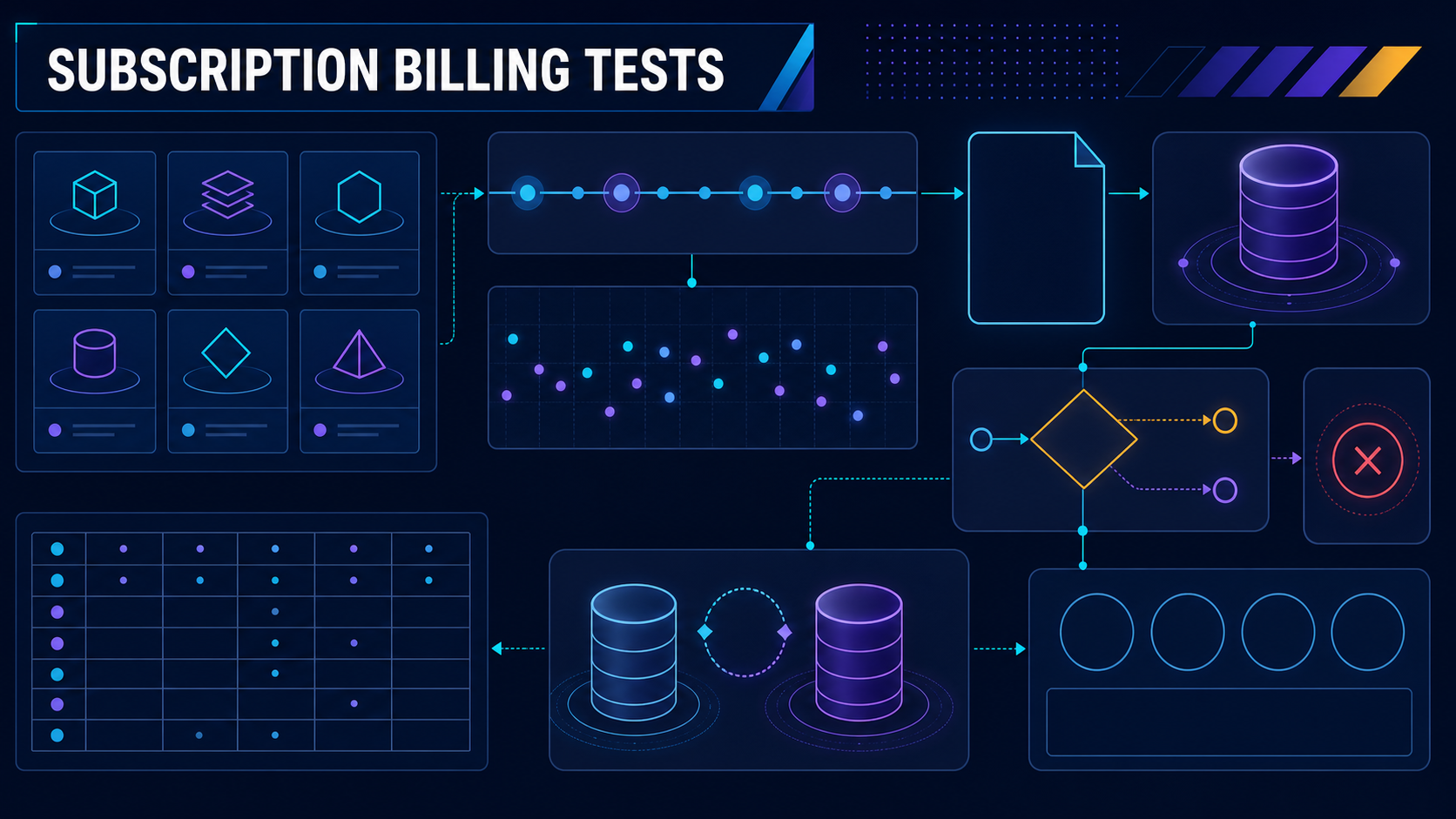
Subscription billing software converts changing commercial terms and consumption into recurring charges, payments, taxes, accounting, and customer obligations. Small date, quantity, or state errors compound across renewals and undermine trust.
Do not test a flat monthly plan. Include free-to-paid conversion, future-dated changes, co-terms, mid-cycle quantity changes, minimums and overages, late and corrected usage, multiple currencies and entities, taxes, card expiry, authorization revocation, duplicate webhooks, partial refunds, disputes, failed retries, pause, cancellation, and reactivation.
Prove Catalog, Price, Discount, And Effective-Date Logic
Define plans, add-ons, tiers, volume, graduated and package pricing, minimums, overages, discounts, coupons, commitments, currencies, regions, tax behavior, versions, and effective dates. The buying brief should name users, workflows, data, integrations, administration, exclusions, assumptions, and the condition that changes the requirement.
Require boundary-value price corpus, expected charge comparison, version history, prohibited retroactive change, and rollback. A catalog can display the right price today while rebilling historical or future periods under the wrong version. Preserve the result in the scored demo, security review, implementation plan, contract, and renewal record so acceptance is auditable.
Validate Contracts, Terms, Amendments, Renewals, And Consent
Define offers, trial conversion, authorization, material terms, frequency, amounts, notice, contract start and end, co-term, renewal, amendment, pause, cancellation, revocation, and evidence. The buying brief should name users, workflows, data, integrations, administration, exclusions, assumptions, and the condition that changes the requirement.
Require term-to-subscription trace, authorization copy, notice scenarios, amendment history, cancellation timing, and revoked-payment test. A charge without clear terms, authorization, and easy accountable state transitions becomes a dispute and compliance risk. Preserve the result in the scored demo, security review, implementation plan, contract, and renewal record so acceptance is auditable.
Test Usage Capture, Rating, Corrections, And Cutoffs
Define event IDs, meters, units, aggregation, dimensions, timestamps, time zones, late events, duplicates, corrections, estimates, cutoff, minimums, credits, and replay. The buying brief should name users, workflows, data, integrations, administration, exclusions, assumptions, and the condition that changes the requirement.
Require labeled event set, idempotency tests, late and corrected event handling, meter reconciliation, and deterministic rerating. Duplicate, lost, late, or reinterpreted usage can create recurring invoice errors that are difficult to unwind. Preserve the result in the scored demo, security review, implementation plan, contract, and renewal record so acceptance is auditable.
Verify Invoices, Proration, Credits, Refunds, And Adjustments
Define cycles, bill in advance and arrears, proration, rounding, taxes, multiple lines, consolidated invoices, credit notes, refunds, disputes, write-offs, close periods, and document versions. The buying brief should name users, workflows, data, integrations, administration, exclusions, assumptions, and the condition that changes the requirement.
Require golden invoice set, line-level calculation trace, proration boundaries, credit and refund reconciliation, and immutable document history. A correct total without explainable lines, rates, periods, taxes, and adjustments cannot support customers or accounting. Preserve the result in the scored demo, security review, implementation plan, contract, and renewal record so acceptance is auditable.
Exercise Payments, Tokens, Retries, Dunning, And Reconciliation
Define cards, bank debits, wallets, payment tokens, authorization, card updates, declines, retries, duplicate prevention, webhooks, chargebacks, disputes, collections, settlement, fees, and payouts. The buying brief should name users, workflows, data, integrations, administration, exclusions, assumptions, and the condition that changes the requirement.
Require payment-state matrix, idempotency and webhook replay, revoked authorization, decline scenarios, settlement reconciliation, and dispute workflow. Blind retries can charge after cancellation, duplicate payment, increase fees, or conflict with authorization and customer promises. Preserve the result in the scored demo, security review, implementation plan, contract, and renewal record so acceptance is auditable.
Reconcile Tax, Accounting, Revenue, CRM, And Provisioning
Define customers, orders, contracts, entitlements, tax location and evidence, invoices, payments, credits, deferred revenue inputs, ledger accounts, provisioning, access removal, APIs, and corrections. The buying brief should name users, workflows, data, integrations, administration, exclusions, assumptions, and the condition that changes the requirement.
Require source-to-field map, order-to-cash trace, tax and journal reconciliation, entitlement timing, retry recovery, and correction propagation. Billing can collect the right cash while tax, ledger, revenue schedules, CRM, and service access disagree. Preserve the result in the scored demo, security review, implementation plan, contract, and renewal record so acceptance is auditable.
Secure Payment And Customer Data And Preserve Auditability
Define roles, tenant separation, payment tokens, sensitive authentication data, bank details, invoices, exports, service accounts, secrets, encryption, support access, audit logs, retention, deletion, incidents, and backups. The buying brief should name users, workflows, data, integrations, administration, exclusions, assumptions, and the condition that changes the requirement.
Require role tests, token and secret rotation, prohibited-data scan, audit export, deletion trace, backup retention evidence, and incident tabletop. Recurring billing concentrates durable payment authority and customer history, making broad access and retained secrets especially dangerous. Preserve the result in the scored demo, security review, implementation plan, contract, and renewal record so acceptance is auditable.
Model Scale, Resilience, Portability, And Total Cost
Define customers, subscriptions, invoices, usage events, payments, currencies, entities, tax calls, webhooks, storage, implementation, finance operations, support, renewal, provider outage, export, and exit. The buying brief should name users, workflows, data, integrations, administration, exclusions, assumptions, and the condition that changes the requirement.
Require billing-day load test, failure injection, three-year scenarios, operating RACI, contract protections, complete export, and parallel-billing replacement run. Event volume, payment and tax fees, finance labor, historical records, and proprietary catalog logic can make switching prohibitively risky. Preserve the result in the scored demo, security review, implementation plan, contract, and renewal record so acceptance is auditable.
Review The Platform From Commercial Terms To Reconciled Cash And Exit
Prove Catalog, Contracts, Usage, Invoices, Payments, And Integrations
Prove Catalog, Price, Discount, And Effective-Date Logic
Confirm plans, add-ons, tiers, volume, graduated and package pricing, minimums, overages, discounts, coupons, commitments, currencies, regions, tax behavior, versions, and effective dates; retain boundary-value price corpus, expected charge comparison, version history, prohibited retroactive change, and rollback.
Validate Contracts, Terms, Amendments, Renewals, And Consent
Confirm offers, trial conversion, authorization, material terms, frequency, amounts, notice, contract start and end, co-term, renewal, amendment, pause, cancellation, revocation, and evidence; retain term-to-subscription trace, authorization copy, notice scenarios, amendment history, cancellation timing, and revoked-payment test.
Prove Security, Auditability, Resilience, Portability, And Cost
Secure Payment And Customer Data And Preserve Auditability
Confirm roles, tenant separation, payment tokens, sensitive authentication data, bank details, invoices, exports, service accounts, secrets, encryption, support access, audit logs, retention, deletion, incidents, and backups; retain role tests, token and secret rotation, prohibited-data scan, audit export, deletion trace, backup retention evidence, and incident tabletop.
Model Scale, Resilience, Portability, And Total Cost
Confirm customers, subscriptions, invoices, usage events, payments, currencies, entities, tax calls, webhooks, storage, implementation, finance operations, support, renewal, provider outage, export, and exit; retain billing-day load test, failure injection, three-year scenarios, operating RACI, contract protections, complete export, and parallel-billing replacement run.
Subscription Billing Software Buying Test Scorecard
| Buying area | What to confirm | Why it matters |
|---|---|---|
| Prove Catalog, Price, Discount, And Effective-Date Logic | plans, add-ons, tiers, volume, graduated and package pricing, minimums, overages, discounts, coupons, commitments, currencies, regions, tax behavior, versions, and effective dates. | A catalog can display the right price today while rebilling historical or future periods under the wrong version. |
| Validate Contracts, Terms, Amendments, Renewals, And Consent | offers, trial conversion, authorization, material terms, frequency, amounts, notice, contract start and end, co-term, renewal, amendment, pause, cancellation, revocation, and evidence. | A charge without clear terms, authorization, and easy accountable state transitions becomes a dispute and compliance risk. |
| Test Usage Capture, Rating, Corrections, And Cutoffs | event IDs, meters, units, aggregation, dimensions, timestamps, time zones, late events, duplicates, corrections, estimates, cutoff, minimums, credits, and replay. | Duplicate, lost, late, or reinterpreted usage can create recurring invoice errors that are difficult to unwind. |
| Verify Invoices, Proration, Credits, Refunds, And Adjustments | cycles, bill in advance and arrears, proration, rounding, taxes, multiple lines, consolidated invoices, credit notes, refunds, disputes, write-offs, close periods, and document versions. | A correct total without explainable lines, rates, periods, taxes, and adjustments cannot support customers or accounting. |
| Exercise Payments, Tokens, Retries, Dunning, And Reconciliation | cards, bank debits, wallets, payment tokens, authorization, card updates, declines, retries, duplicate prevention, webhooks, chargebacks, disputes, collections, settlement, fees, and payouts. | Blind retries can charge after cancellation, duplicate payment, increase fees, or conflict with authorization and customer promises. |
| Reconcile Tax, Accounting, Revenue, CRM, And Provisioning | customers, orders, contracts, entitlements, tax location and evidence, invoices, payments, credits, deferred revenue inputs, ledger accounts, provisioning, access removal, APIs, and corrections. | Billing can collect the right cash while tax, ledger, revenue schedules, CRM, and service access disagree. |
Questions To Ask Before Approval
- How will the proposal define plans, add-ons, tiers, volume, graduated and package pricing, minimums, overages, discounts, coupons, commitments, currencies, regions, tax behavior, versions, and effective dates and prove it with boundary-value price corpus, expected charge comparison, version history, prohibited retroactive change, and rollback?
- How will the proposal define offers, trial conversion, authorization, material terms, frequency, amounts, notice, contract start and end, co-term, renewal, amendment, pause, cancellation, revocation, and evidence and prove it with term-to-subscription trace, authorization copy, notice scenarios, amendment history, cancellation timing, and revoked-payment test?
- How will the proposal define event IDs, meters, units, aggregation, dimensions, timestamps, time zones, late events, duplicates, corrections, estimates, cutoff, minimums, credits, and replay and prove it with labeled event set, idempotency tests, late and corrected event handling, meter reconciliation, and deterministic rerating?
- How will the proposal define cycles, bill in advance and arrears, proration, rounding, taxes, multiple lines, consolidated invoices, credit notes, refunds, disputes, write-offs, close periods, and document versions and prove it with golden invoice set, line-level calculation trace, proration boundaries, credit and refund reconciliation, and immutable document history?
- How will the proposal define cards, bank debits, wallets, payment tokens, authorization, card updates, declines, retries, duplicate prevention, webhooks, chargebacks, disputes, collections, settlement, fees, and payouts and prove it with payment-state matrix, idempotency and webhook replay, revoked authorization, decline scenarios, settlement reconciliation, and dispute workflow?
- How will the proposal define customers, orders, contracts, entitlements, tax location and evidence, invoices, payments, credits, deferred revenue inputs, ledger accounts, provisioning, access removal, APIs, and corrections and prove it with source-to-field map, order-to-cash trace, tax and journal reconciliation, entitlement timing, retry recovery, and correction propagation?
- How will the proposal define roles, tenant separation, payment tokens, sensitive authentication data, bank details, invoices, exports, service accounts, secrets, encryption, support access, audit logs, retention, deletion, incidents, and backups and prove it with role tests, token and secret rotation, prohibited-data scan, audit export, deletion trace, backup retention evidence, and incident tabletop?
- How will the proposal define customers, subscriptions, invoices, usage events, payments, currencies, entities, tax calls, webhooks, storage, implementation, finance operations, support, renewal, provider outage, export, and exit and prove it with billing-day load test, failure injection, three-year scenarios, operating RACI, contract protections, complete export, and parallel-billing replacement run?
Buying Red Flags
A recurring charge without a preserved term, authorization, price version, and cancellation state is not an explainable bill.
Retries and webhooks without idempotency can charge or provision twice.
Storing card verification codes for recurring transactions is prohibited by PCI DSS guidance.
Source Links
- FTC Negative Option Rule resources
- FTC guidance on free trials and subscriptions
- PCI SSC FAQ on recurring transaction card verification codes
- CFPB automatic payment guidance
FAQ
What is subscription billing software?
It manages recurring commercial terms, usage rating, invoices, payments, credits, taxes, collections, accounting handoffs, and subscription lifecycle changes.
What makes usage billing difficult?
Event identity, units, time zones, aggregation, duplicates, late and corrected events, cutoffs, minimums, tier boundaries, and rerating must remain deterministic.
How should proration be tested?
Use exact boundary dates, time zones, quantities, plan changes, billing periods, rounding, taxes, credits, cancellation, and stated contract rules.
Can card verification codes be stored for renewals?
No. PCI SSC states that card verification codes cannot be retained after authorization and are not needed for card-on-file or recurring transactions.
What should cancellation testing cover?
Effective time, access, final usage, final invoice, refunds or credits, retries, notices, payment authorization, reactivation, data retention, and downstream propagation.
What must be portable?
Catalog versions, customers, contracts, authorizations, subscriptions, amendments, usage events, invoices, credits, payments, disputes, taxes, journals, entitlements, and audit logs.
Related Software Buyer Guide Guides
- CRM software migration checklist
- Contract lifecycle management checklist
- Workflow automation software checklist
Approve subscription billing only when every term, authorization, event, charge, payment, tax, credit, cancellation, entitlement, and ledger entry can be reconciled.