
Short answer: Standardize on encryption key management software only after inventorying keys, certificates, algorithms, protected data, owners and dependencies; defining generation quality and approved modules; separating administrators, custodians and auditors; enforcing purpose, environment, tenant and application boundaries; setting cryptoperiod, rotation, version and retirement policy by key type; testing emergency revocation and re-encryption after compromise; proving backup, archive, escrow and recovery without uncontrolled duplication; measuring service latency, caching and regional failure behavior; exporting immutable key, policy and administrative evidence; integrating clouds, databases, storage, applications, CI/CD and hardware modules; verifying algorithm and key-length transitions plus post-quantum inventory support; modeling operations, HSM, region, transaction and support cost; and rehearsing migration of wrapped keys and encrypted data. Centralization is useful only if it does not create one unprotected control plane or one unrecoverable dependency.
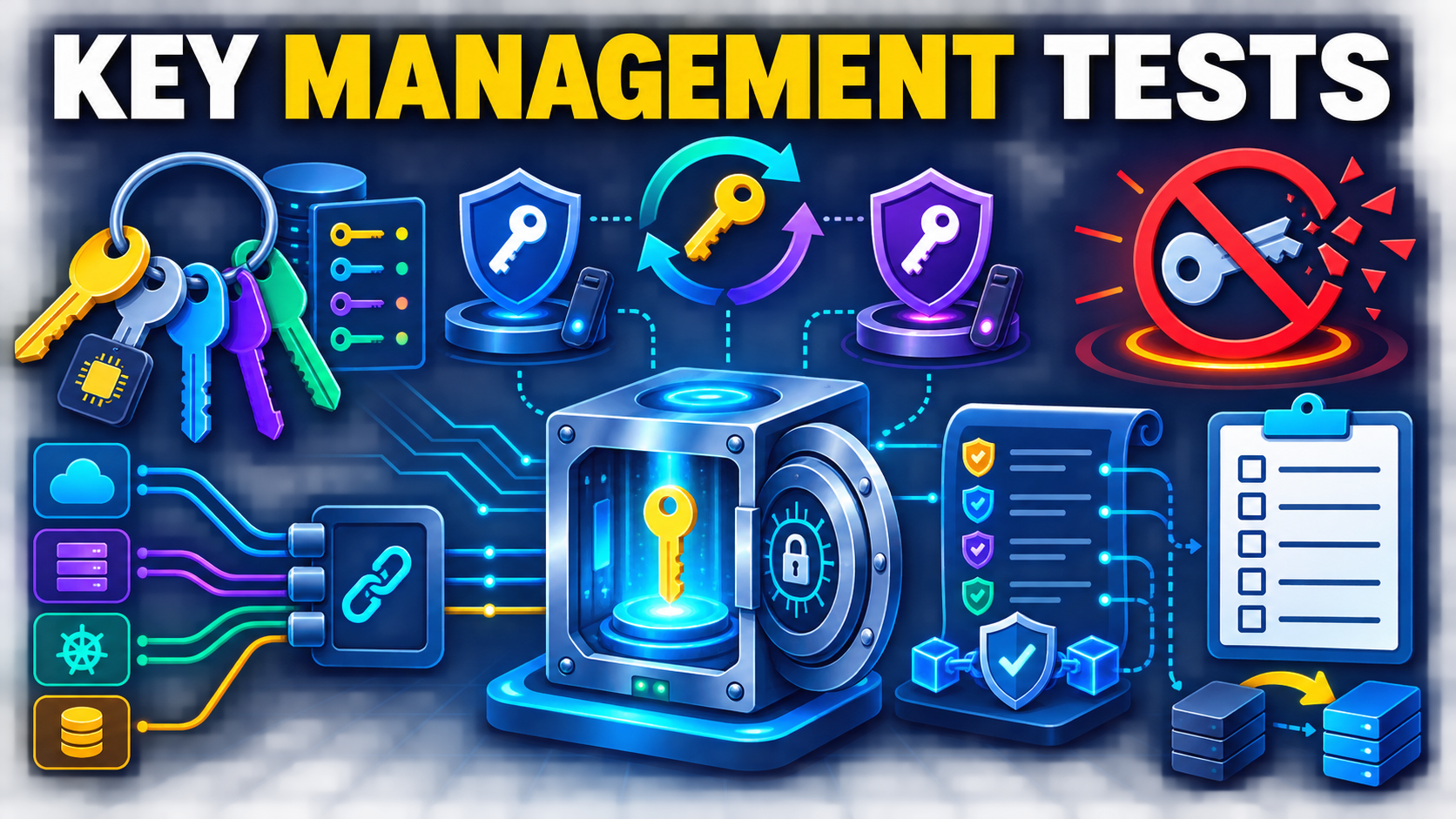
NIST SP 800-57 treats generation, storage, establishment, use, revocation, recovery and destruction as a lifecycle and emphasizes key and certificate inventory. CISA also recommends a cryptographic inventory as a foundation for post-quantum migration. Buyers should test governance and cryptographic agility along with API performance.
Normalize the same key types, algorithms, protected workloads, clouds, regions, hardware assurance, transaction rate, rotation frequency, availability, evidence retention, recovery and migration. Cloud KMS, external key managers, HSM clusters and application secret stores have different boundaries and should not be scored as interchangeable.
Build A Cryptographic Inventory First
Discover key and certificate locations, algorithms, sizes, owners, applications, data sensitivity, cryptoperiods and expiry. Include embedded, cloud, database, storage, backup, signing, token, device and third-party dependencies. Record unknown ownership as a risk, not as inventory completion.
Test whether the product continuously reconciles cloud and local sources, detects unmanaged keys, maps each key to protected assets and highlights algorithm or lifetime policy violations. Export the inventory in a usable format for risk and migration planning.
Test Generation, Custody, And Separation
Verify approved random generation, cryptographic modules, import, wrapping, derivation and attestation requirements for each key class. Confirm whether provider personnel, cloud administrators or tenant operators can access plaintext key material.
Separate policy administration, key custody, recovery and audit. Require strong workload identity, human multifactor authentication, least privilege, time-bound access and dual control where risk warrants. Test tenant and environment isolation with negative authorization cases.
Rotate, Revoke, Recover, And Destroy
Pilot routine rotation while applications continue reading data encrypted under older versions and write with the new version. Measure propagation, cache invalidation, re-encryption and rollback. Test missed rotations and expired certificates.
Simulate compromise: revoke or disable the key, identify affected data and callers, issue replacement material, restore service and preserve evidence. Separately test authorized recovery from backup or archive and verified destruction when retention ends.
Prove Availability And Auditability
Load test encrypt, decrypt, wrap, unwrap and signing operations with realistic latency budgets. Fail a node, HSM, network path and region. Verify safe caching, retry, quota and degraded-mode behavior without falling back to hardcoded or locally exported keys.
Export creation, import, access, denial, rotation, policy, administrator, recovery, backup and destruction events. Correlate keys to applications and incidents, protect log integrity and alert on unusual decrypt volume or policy weakening.
Demand Crypto Agility And A Tested Exit
Verify algorithm and key-length policy, deprecation reporting, bulk rotation and re-encryption workflows. Use the inventory to identify public-key dependencies relevant to post-quantum planning rather than accepting a generic quantum-ready claim.
Price software, HSMs, cloud requests, storage, regions, private connectivity, support and migration labor. Rehearse exporting wrapped material where permitted, recreating policy, moving applications and decrypting or re-encrypting data without vendor-only tooling.
Normalize Key Management Evaluations
Normalize Scope
Use One Key Inventory
Compare identical key types, algorithms, assets, owners, regions, cryptoperiods and dependencies.
Use One Trust Boundary
Map vendor, cloud, HSM, platform, application and human administrator access.
Normalize Lifecycle
Use One Rotation Drill
Rotate a live workload, retain old-version reads, re-encrypt, fail and roll back.
Use One Compromise Drill
Revoke, identify affected assets, replace, recover service and export evidence.
Normalize Exit
Use One Migration Workload
Move keys, policies and encrypted data for one representative application.
Use One Cost Model
Include HSM, requests, regions, network, support, staffing and crypto transitions.
Encryption Key Management Software Scorecard
| Buying area | What to confirm | Why it matters |
|---|---|---|
| Inventory | Keys, certificates, algorithms, owners, assets, expiry | Makes unmanaged cryptography and migration dependencies visible |
| Generation | Randomness, modules, import, wrapping, attestation | Establishes trustworthy key origin and handling |
| Custody | Roles, dual control, workload identity, isolation | Limits human and service access to key material |
| Lifecycle | Cryptoperiod, rotation, versioning, revocation, destruction | Keeps protection current and responds to compromise |
| Recovery | Backup, archive, escrow, restore, integrity, approvals | Avoids permanent data loss without uncontrolled copies |
| Availability | Latency, cache, retry, node, HSM and region failure | Prevents encryption services from becoming an outage source |
| Evidence | Access, denial, policy, admin, recovery, destruction | Supports investigation and lifecycle accountability |
| Agility | Deprecation, algorithm transition, re-encryption, export | Prepares for changing cryptographic requirements |
Questions To Ask Before Shortlisting
- Can the platform discover keys and certificates it did not create?
- How are keys mapped to applications, data and business owners?
- Which modules and processes generate or import each key class?
- Who can change policy, use keys, recover backups and audit events?
- Can vendor or cloud administrators obtain plaintext key material?
- What happens to reads and writes during key rotation?
- How quickly can a compromised key be revoked and affected data identified?
- How are key backups protected, tested and destroyed?
- What occurs when the HSM, network or region is unavailable?
- Which events prove every lifecycle and administrator action?
- How are deprecated algorithms and post-quantum dependencies inventoried?
- How are keys, policies and encrypted data moved at exit?
Buying Red Flags
The product manages newly created keys but cannot inventory existing cryptography.
One global administrator can change policy, recover keys and delete evidence.
Rotation is demonstrated only on an idle sample without old-version reads or rollback.
Availability depends on exporting long-lived keys into applications during outages.
Quantum-ready marketing has no algorithm inventory, dependency map or migration workflow.
Source Links
- NIST: Key Management Guidelines
- NIST SP 800-57 Part 1 Rev. 5
- NIST SP 800-57 Part 2 Rev. 1
- CISA: Quantum-Readiness—Migration To Post-Quantum Cryptography
FAQ
Is key management software the same as a secrets manager?
They can overlap, but key management focuses on cryptographic key lifecycle and operations while secrets managers often store credentials, tokens and configuration values. Evaluate the required boundary rather than the label.
Why is key inventory important?
Organizations cannot rotate, revoke, migrate or assess cryptography they cannot locate and map to owners, algorithms, applications and protected data.
Should applications cache encryption keys?
Short-lived, protected caching may support availability and latency, but it changes the exposure window. Test cache protection, expiry, revocation and outage behavior explicitly.
What does dual control mean?
It requires more than one authorized party or role for a sensitive action such as recovering a high-value key or weakening policy, reducing unilateral abuse risk.
How should rotation be tested?
Rotate under representative traffic, verify new writes and old reads, observe propagation and caches, test re-encryption, then trigger failure and rollback.
What supports post-quantum readiness today?
A reliable inventory of algorithms, certificates, protocols, vendors, data lifetimes and application dependencies is the practical foundation for prioritizing future transitions.
Related Software Buying Guides
- Secrets Management Software Checklist
- Certificate Lifecycle Management Checklist
- Data Tokenization Platform Buying Tests
Cryptography remains dependable only when every key is known, its purpose and lifetime are governed, compromise and recovery are rehearsed, and applications can migrate without losing access to their data.