
Short answer: Deploy mobile threat defense software after defining corporate-owned, personally enabled and BYOD scope; mapping supported operating-system versions and enrollment modes; testing rooted or jailbroken devices, configuration drift, malicious and risky apps, phishing links, unsafe networks and exploit indicators; measuring detection delay, false positives and resistance to tampering; documenting exactly what device, app, traffic, location and user data the service collects; separating security signals from personal content; integrating findings with mobile management, identity, conditional access and incident response; testing graduated actions from warning through access restriction and selective wipe; proving offline, battery, bandwidth and update behavior; exporting alert, policy, analyst and response evidence; rehearsing lost-device, travel, compromise and unenrollment workflows; modeling licenses, support and investigation labor; and confirming clean removal of agents, profiles, certificates and retained telemetry. MTD complements device management and access policy; it does not replace them.
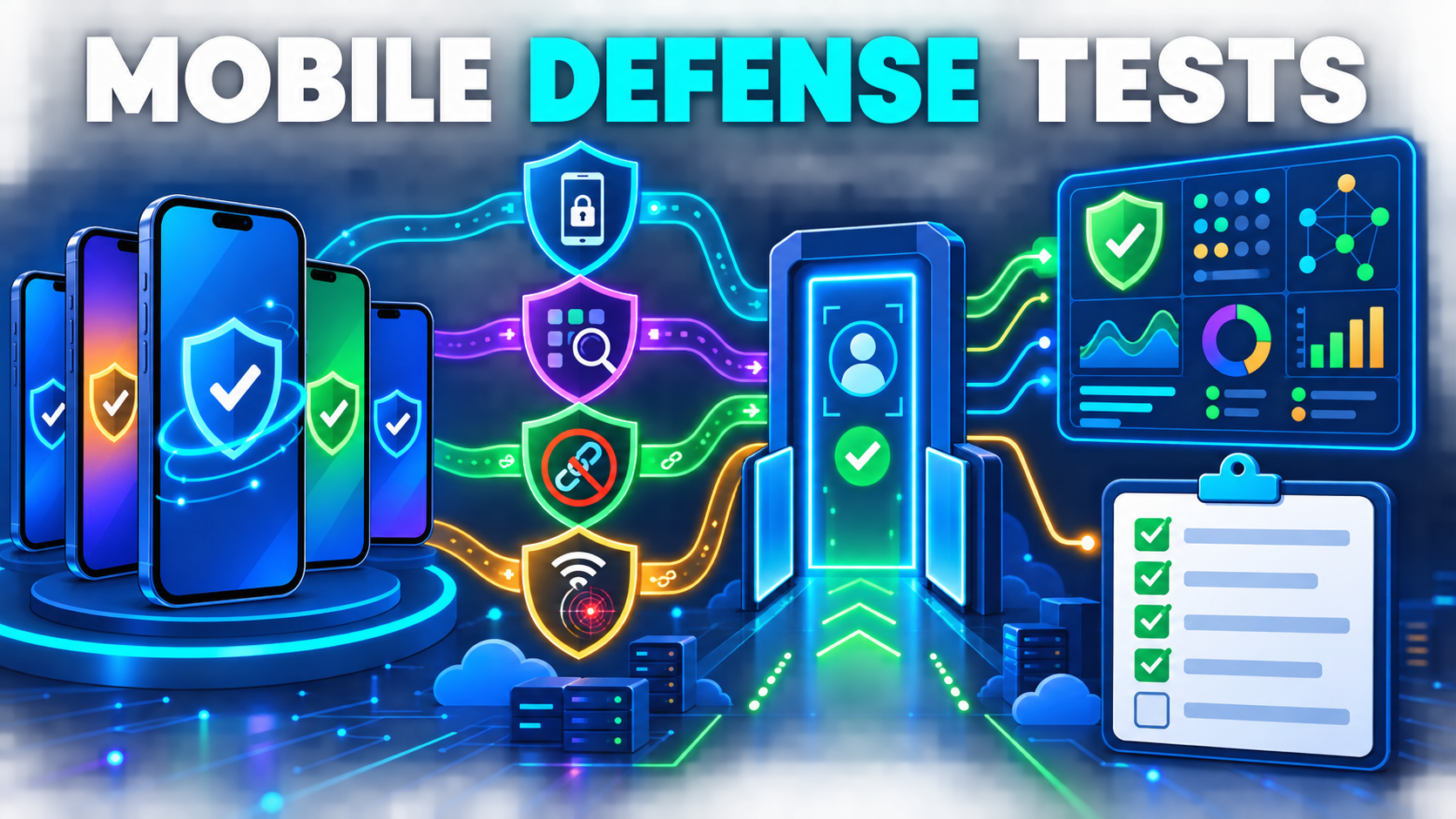
NIST SP 800-124 Rev. 2 covers centralized device management and endpoint protection across organization-owned and personally owned mobile scenarios. CISA recommends treating devices as untrusted when update, configuration, root status or monitoring conditions fail. A buyer should prove how MTD signals improve those lifecycle decisions.
Normalize the same devices, OS versions, ownership models, apps, links, networks, travel conditions, privacy policy, integrations, action thresholds, telemetry retention and support. Agent, local-VPN, DNS, SDK and cloud-analysis architectures provide different coverage and battery, privacy and network implications.
Define Fleet, Threats, And Privacy Boundaries
Inventory device ownership, OS and version, hardware support life, enrollment, workforce groups, sensitive apps and access paths. Build scenarios for rooting, delayed patches, sideloading, risky permissions, credential phishing, malicious QR codes, unsafe Wi-Fi, certificate manipulation and device theft.
Publish which identifiers, app metadata, URLs, DNS, traffic, location, device health and personal information are collected. Test BYOD separation and regional processing. Security teams should receive the minimum signal needed for risk decisions, not unbounded visibility into personal activity.
Run Device, App, Web, And Network Attacks
Use authorized lab devices to test integrity compromise, developer options, outdated OS, insecure configuration, malicious profiles and tampering with the defense agent. Measure detection when the device is offline and after connectivity returns.
Test known-benign and risky apps, repackaged apps, dangerous permissions, sideloading, phishing in browsers and messaging, redirects, QR codes, TLS interception and hostile Wi-Fi. Record true positives, false positives, explanation quality and time to policy action.
Connect Signals To Access And Response
Integrate MTD with mobile device management, identity, conditional access, SIEM and case management. Confirm stable device identity and normalized severity. Prevent one low-confidence alert from causing a destructive response without appropriate context and approval.
Test warnings, user remediation, network isolation, application blocking, token revocation, access denial, selective wipe and full wipe according to ownership. Measure recovery when risk clears and preserve emergency communication paths.
Measure Daily Burden And Evidence
Track battery, data use, local-VPN conflicts, browser and app latency, update behavior, accessibility and help-desk volume. Test OS upgrades, device replacement, roaming, captive portals and travel. A control users routinely disable provides limited protection.
Export device posture, detection basis, policy version, user notice, analyst change and response events. Require retention controls, evidence integrity and alert tuning. Validate vendor intelligence update frequency and transparent correction of false positives.
Pilot Lifecycle, Cost, And Exit
Pilot enrollment, device replacement, lost mode, leave of absence, termination, BYOD unenrollment and disposal. Confirm selective removal of enterprise data and certificates without deleting personal content when policy requires separation.
Price device tiers, premium detection modules, mobile management or identity dependencies, data retention, regions, support and analyst time. At exit, remove agents, local-VPN or DNS profiles, certificates and access bindings, then export or delete telemetry with evidence.
Normalize Mobile Defense Evaluations
Normalize Coverage
Use One Fleet Matrix
Compare identical ownership, OS, versions, hardware, enrollment and sensitive applications.
Use One Attack Set
Run the same device, app, phishing, network and tamper scenarios.
Normalize Outcomes
Use One Severity Model
Map identical detections to warning, remediation, access restriction and wipe.
Use One Privacy Review
Compare collected fields, personal visibility, region, retention and employee notice.
Normalize Operations
Use One Burden Test
Measure battery, network, latency, conflicts, tickets and false-positive handling.
Use One Offboarding Drill
Remove enterprise controls and data while preserving personal content where required.
Mobile Threat Defense Software Scorecard
| Buying area | What to confirm | Why it matters |
|---|---|---|
| Fleet | Ownership, OS, versions, hardware, enrollment, support life | Defines actual device coverage |
| Device | Integrity, patch, configuration, profile, tamper, offline | Detects compromised or untrusted endpoints |
| App | Reputation, behavior, permissions, sideload, repackaging | Identifies risky software beyond inventory |
| Web and network | Links, QR, redirects, DNS, Wi-Fi, certificates | Covers common mobile attack paths |
| Privacy | Telemetry, personal content, location, region, retention | Limits employee surveillance and legal risk |
| Response | Warn, remediate, isolate, revoke, deny, wipe, recover | Turns signals into proportionate action |
| Operations | Battery, traffic, conflicts, upgrades, tickets, tuning | Shows whether protection is sustainable |
| Lifecycle | Enroll, replace, lose, terminate, unenroll, delete | Protects every stage of device use |
Questions To Ask Before Shortlisting
- Which ownership and enrollment models are fully supported?
- How quickly are new OS versions and devices covered?
- What telemetry is collected from corporate and personal activity?
- How are rooting, app risk, phishing and hostile networks detected?
- What are false-positive rates on the buyer's app and network mix?
- Can users or malware tamper with the agent or local network profile?
- How do detections affect identity and application access?
- Which responses require analyst or owner approval?
- How are battery, traffic, latency and VPN conflicts measured?
- Which evidence explains a detection and every response?
- How does BYOD unenrollment protect personal content?
- What agents, profiles, certificates and telemetry remain at exit?
Buying Red Flags
Coverage claims omit specific OS versions, ownership modes or enrollment limits.
The service collects broad URL, app or location data without a documented privacy purpose and retention limit.
A single opaque risk score can trigger wipe or lockout with no evidence or recovery path.
The pilot skips battery, local-VPN conflicts, captive portals, OS upgrades and offline behavior.
Unenrollment leaves certificates, DNS or access bindings active after the agent is removed.
Source Links
- NIST SP 800-124 Rev. 2: Managing Mobile Device Security
- NIST SP 1800-21: Mobile Device Security For COPE
- CISA: Mobile Device Cybersecurity Checklist
- NSA: Mobile Device Best Practices
FAQ
How is MTD different from MDM?
MDM configures and manages devices. MTD focuses on detecting device, application, phishing and network threats. They commonly exchange posture and response signals.
Can MTD inspect personal content on BYOD devices?
Capabilities vary. Buyers should minimize telemetry, document separation, test the actual enrollment mode and align collection with employee notice and legal requirements.
Does MTD require a local VPN?
Some products use a local VPN or network extension for web and network analysis, while others use DNS, APIs, agents or combinations. Test conflicts and privacy implications.
What should a proof of concept attack?
Use authorized lab devices to test integrity compromise, outdated versions, risky apps, phishing links, QR redirects, hostile Wi-Fi, certificate changes, tampering and offline behavior.
Should every detection block access?
No. Response should reflect confidence, severity, ownership and business impact, with remediation and recovery paths for false positives.
What must be removed during offboarding?
Remove the agent, management or network profiles, certificates, enterprise data, identity bindings and retained telemetry according to policy while protecting personal content where applicable.
Related Software Buying Guides
- Mobile Device Management Software Checklist
- Zero Trust Network Access Buying Checklist
- Phishing Training Software Checklist
Mobile defense creates value when trustworthy signals produce proportionate access decisions and clean lifecycle actions without turning personal devices into uncontrolled surveillance endpoints.