
Short answer: buy API security testing software only if it can discover real APIs, import or infer schemas, test authentication and authorization logic, check object-level access, validate input and rate-limit behavior, fit CI/CD without blocking every release, and produce evidence developers can reproduce and fix.
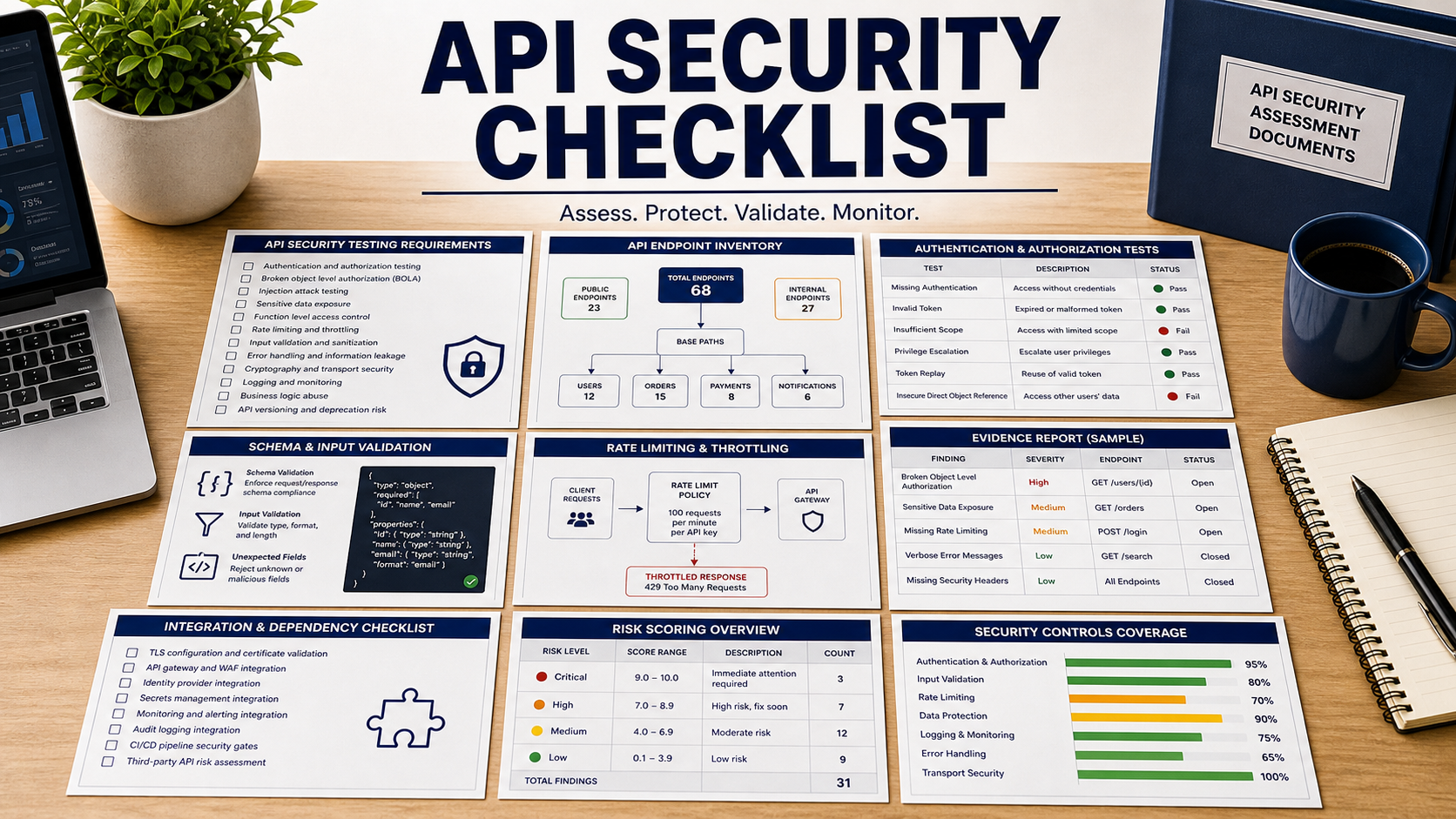
NIST SP 800-218, the Secure Software Development Framework, emphasizes building security into software development practices. For API testing tools, that means the tool should help teams find and fix issues before release, not only report risk after production incidents.
API security is not just vulnerability scanning. The hardest failures often involve authorization logic, unexpected endpoints, stale schemas, weak token handling, excessive data exposure, and abusive request patterns. A useful demo should test those conditions against representative APIs.
Start With API Inventory And Schema Reality
Ask how the tool discovers APIs: gateway logs, code repositories, runtime traffic, documentation files, cloud resources, and manual import. Then compare discovered endpoints against the official schema or contract.
Shadow and zombie APIs matter because teams cannot test what they do not know exists. The tool should show undocumented endpoints, drift from schema, deprecated routes, and owners for each API group.
Test Authorization, Not Only Authentication
Authentication asks who the caller is. Authorization asks what that caller may do. Ask the vendor to test role changes, object ownership, tenant boundaries, horizontal access, vertical privilege, and admin-only operations.
The demo should include at least two user roles and two data objects. If the tool cannot reproduce object-level access issues with clear requests and responses, developers may not trust the finding.
Validate Inputs, Abuse Paths, And Rate Limits
API tests should cover schema validation, unexpected methods, oversized payloads, injection-like inputs, pagination abuse, mass assignment, error leakage, and rate-limit behavior. Ask which tests are safe in production and which require a staging environment.
Abuse testing should be controlled. A tool that floods production APIs without guardrails can create availability problems. The buying decision should include test throttling, allowlists, maintenance windows, and environment separation.
Make CI/CD Gates Practical
Security gates need severity thresholds, baseline handling, owner routing, exceptions, and evidence. If every issue blocks a release, developers will route around the tool. If nothing blocks, the tool becomes reporting only.
Ask how findings move into tickets, how retests close issues, how false positives are documented, and how exceptions expire. CISA Secure by Design messaging reinforces that software producers should reduce security burden for customers; your tool should help developers fix, not just blame.
API Security Testing Software Review Table
| Requirement | What to ask in the demo | Why it matters |
|---|---|---|
| Inventory | Discover documented, undocumented, and deprecated APIs. | Unknown APIs are often untested APIs. |
| Authorization | Test object ownership and role boundaries with real tokens. | Many API risks are logic and access-control failures. |
| Schema and input | Compare schema to runtime behavior and test invalid payloads. | Drift and weak validation create exposure. |
| CI/CD fit | Show gates, baselines, exceptions, and developer tickets. | Testing must fit release workflow. |
| Evidence | Export reproducible requests, responses, severity, and fix guidance. | Developers need proof they can reproduce. |
Questions To Ask Before Buying
- How does the tool discover APIs that are not in documentation?
- Can it test authorization using multiple roles, tenants, and object owners?
- How does it handle API schemas that differ from production behavior?
- Which tests are safe in production, and which require staging?
- Can findings create tickets with reproducible request and response evidence?
- How are false positives, accepted risks, and expired exceptions managed?
- Can CI/CD gates block only issues that meet agreed severity and confidence rules?
Red Flags In This Purchase
The demo tests only generic injection payloads and never tests tenant or object-level authorization.
The product requires perfect API documentation before it can find useful issues.
Findings cannot be reproduced by developers without vendor support.
Source Links
- NIST SP 800-218: Secure Software Development Framework
- NIST: Secure Software Development Framework Project
- CISA: Secure By Design Alerts
- FTC: Start With Security
- FTC: Data Security
FAQ
Is API security testing the same as web vulnerability scanning?
No. API testing needs inventory, schema awareness, authentication context, authorization checks, object-level access tests, and developer-ready evidence.
Should API tests run in production?
Some passive discovery or safe checks may run in production, but intrusive tests usually belong in staging with throttling and approvals.
What is object-level authorization testing?
It checks whether one user, role, or tenant can access or modify another user’s object or data through the API.
What evidence should developers receive?
They need endpoint, method, token context, request, response, expected behavior, observed behavior, severity, and retest steps.
How should CI/CD gating be handled?
Use agreed severity, confidence, ownership, and exception rules so the gate reduces risk without blocking every release for low-confidence findings.
Related Software Buyer Guide Guides
- Secure Code Scanning Software Checklist
- Vulnerability Management Software Checklist
- Incident Response Software Checklist
API security testing earns trust when it finds real endpoints, proves real access-control risk, and gives developers evidence they can reproduce.