Short answer: Buy a data tokenization and vault platform after inventorying each sensitive field and business use; deciding which tokens must be reversible, deterministic, format preserving, domain specific or irreversible; testing collisions, consistency and referential integrity; mapping every tokenization and detokenization caller; enforcing strong service identity, least privilege, purpose and environment separation; isolating the vault and cryptographic keys; measuring batch and online latency at peak load; protecting logs, caches, exports and backups from cleartext leakage; proving high availability, recovery, rotation and compromise response; exporting complete administrative and data-access evidence; piloting schema, analytics and downstream compatibility; planning coexistence and rollback; pricing transactions, storage, HSM or key services, regions and support; and rehearsing bulk detokenization or controlled migration at exit. A token that can be reversed is still linked to the original value through a high-value system.
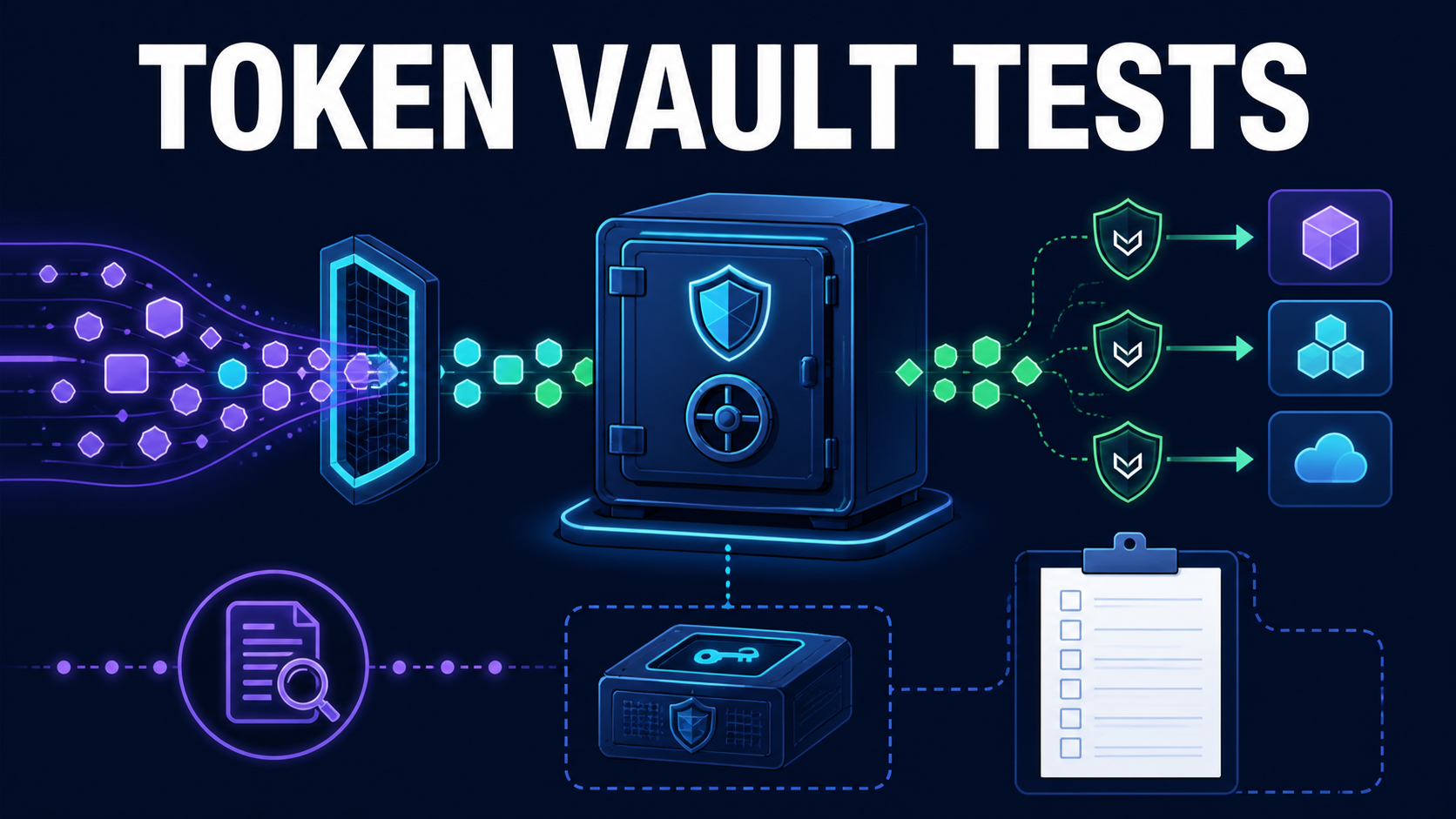
PCI Security Standards Council guidance describes the token vault as an attractive target and says detokenization should be limited to specifically authorized users, applications or systems. NIST's reference implementation likewise treats a data-tokenization appliance and its vault as protected enterprise resources. Buyers should evaluate the full security boundary, not only the generated token format.
Normalize the same data fields, token types, consistency domains, request volume, batch size, regions, callers, detokenization policy, key custody, retention, availability, recovery, evidence and migration horizon. Vaultless cryptographic tokens, mapped tokens and payment-network tokens have different reversibility and dependency models.
Design Token Semantics Around Each Use
Classify payment, identity, health, account, device and other sensitive values. For each field, decide whether applications need equality search, joins, last-four display, validation, uniqueness, reissue, expiry or recovery. Avoid preserving format unless a real integration requires it.
Test whether the same value receives one token globally, per tenant, per application or per context. Domain separation can limit correlation, while deterministic tokens enable joins. Document collision behavior, nulls, Unicode, invalid input and lifecycle when a source value changes.
Lock Down Detokenization And The Vault
Enumerate every service, user, job and support path that can recover cleartext. Require workload identity, mutual authentication, least privilege, purpose limits, environment separation, rate limits and step-up or dual approval for bulk requests.
Place the vault, replicas, caches and management interfaces in a tightly controlled boundary. Separate keys from protected data where the design uses encryption, and test rotation, backup, recovery, compromise and zeroization. A general administrator should not automatically become a detokenization operator.
Run Compatibility And Leakage Tests
Pilot production-shaped schemas, APIs, message queues, warehouses, analytics, search, reporting, fraud systems and third parties. Verify length, character set, sorting, indexing, referential integrity and latency. Track applications that silently require original values.
Search logs, traces, dead-letter queues, error reports, browser storage, exports, notebooks, caches and backups for cleartext. Tokenizing a database column does not reduce exposure if the application copies the original value into telemetry or support tools.
Prove Availability, Evidence, And Recovery
Load test online and batch operations at peak concurrency, including key or vault dependency failures, regional loss, timeouts and retries. Confirm idempotency so a retry does not create inconsistent tokens. Measure recovery objectives and test failover without bypassing policy.
Export requester, purpose, field class, token operation, policy decision, administrator change, key event, bulk job and deletion evidence without logging protected values. Alert on unusual detokenization volume, new callers, failed authorization and policy weakening.
Plan Migration, Scope, Cost, And Exit
Build a field-by-field migration inventory, coexistence rules, backfill sequence, validation counts, rollback, downstream cutover and data-retention plan. Confirm how tokenization affects regulatory scope with qualified assessors; technology alone does not automatically remove every connected system from obligations.
Price token operations, vault storage, HSM or key management, replicas, regions, data transfer, premium support and migration services. Rehearse exporting mappings or controlled bulk detokenization under approvals, then deleting source and backup copies with evidence.
Normalize Tokenization Platform Evaluations
Normalize Semantics
Use One Field Matrix
Compare identical data classes, reversibility, determinism, format, domain and lifecycle rules.
Use One Caller List
Test the same applications, jobs, users and bulk-detokenization paths.
Normalize Operations
Use One Load Profile
Run identical online, batch, retry, failover and regional-recovery scenarios.
Use One Leakage Hunt
Inspect logs, traces, queues, caches, reports, exports and backups for originals.
Normalize Exit
Use One Migration Drill
Backfill, validate, coexist, rollback and retire one representative data domain.
Use One Evidence Set
Export operations, denials, admin changes, keys, bulk jobs and deletion proof.
Data Tokenization And Vault Platform Scorecard
| Buying area | What to confirm | Why it matters |
|---|---|---|
| Field design | Class, use, reversibility, determinism, format, domain | Prevents token behavior from breaking or overexposing data |
| Detokenization | Callers, identity, purpose, approvals, rate limits | Controls the path back to cleartext |
| Vault and keys | Isolation, custody, rotation, backup, recovery, zeroization | Protects the highest-value compromise targets |
| Compatibility | Schemas, joins, search, reports, APIs, third parties | Reveals where tokens alter application behavior |
| Leakage | Logs, traces, queues, caches, exports, backups | Stops cleartext from escaping the designed boundary |
| Resilience | Peak load, retry, idempotency, failover, recovery | Keeps protected workflows available and consistent |
| Evidence | Requests, decisions, admins, keys, bulk jobs, deletion | Supports investigations and control assessment |
| Migration | Backfill, coexistence, validation, rollback, exit | Avoids lock-in and irreversible cutover risk |
Questions To Ask Before Shortlisting
- Which sensitive fields and application uses are in scope?
- Which tokens must be reversible or deterministic, and why?
- Can one token be correlated across tenants or applications?
- Which identities can tokenize or detokenize each field class?
- How are bulk detokenization and support access approved?
- Where are vault data, keys, caches and backups stored?
- What happens during key rotation or vault-region failure?
- Which schemas, joins, searches and reports break with tokens?
- How does the product find cleartext in logs and downstream tools?
- Which events prove requests, denials, policy changes and deletions?
- What is the cutover, validation and rollback plan?
- How can mappings or originals be migrated safely at contract exit?
Buying Red Flags
The vendor recommends one token type for every data field and use case.
Detokenization is granted through broad administrator roles or static shared credentials.
The vault and its encryption keys share the same control plane without explained separation.
The pilot validates database values but ignores logs, queues, caches, reports and backups.
Exit requires vendor professional services but no tested export format, throughput or deletion evidence.
Source Links
- PCI SSC: Tokenization Guidelines Information Supplement
- PCI SSC: Tokenization Product Security Guidelines
- NIST NCCoE: Data Tokenization Appliance Reference Implementation
- OWASP: Cryptographic Storage Cheat Sheet
FAQ
How is tokenization different from encryption?
Mapped tokenization replaces a value with a surrogate and keeps the relationship in a protected vault. Encryption transforms data with a cryptographic key. Some token products use cryptography or combine both approaches.
Are reversible tokens anonymous?
No. If a system can map a token back to a person or original value, the token remains linked through that system and needs appropriate controls.
What is domain separation?
It means the same source value can receive different tokens for different tenants, applications or contexts, reducing unintended cross-system correlation.
Why test logs and traces?
Applications often record originals before tokenization or during errors. Those copies can defeat the intended reduction in sensitive-data exposure.
What should a performance pilot include?
Test online and batch traffic, peaks, retries, idempotency, regional failover, key operations and bulk migration with representative payload sizes.
Does tokenization automatically reduce compliance scope?
Not automatically. Scope depends on the standard, token design, detokenization paths and connected systems. Confirm the conclusion with the relevant compliance authority or assessor.
Related Software Buying Guides
- Data Masking Software Checklist
- Data Classification Software Checklist
- Database Activity Monitoring Checklist
A token is useful only when its semantics fit the application and every path back to sensitive data is deliberately controlled, observable, resilient, and portable.